
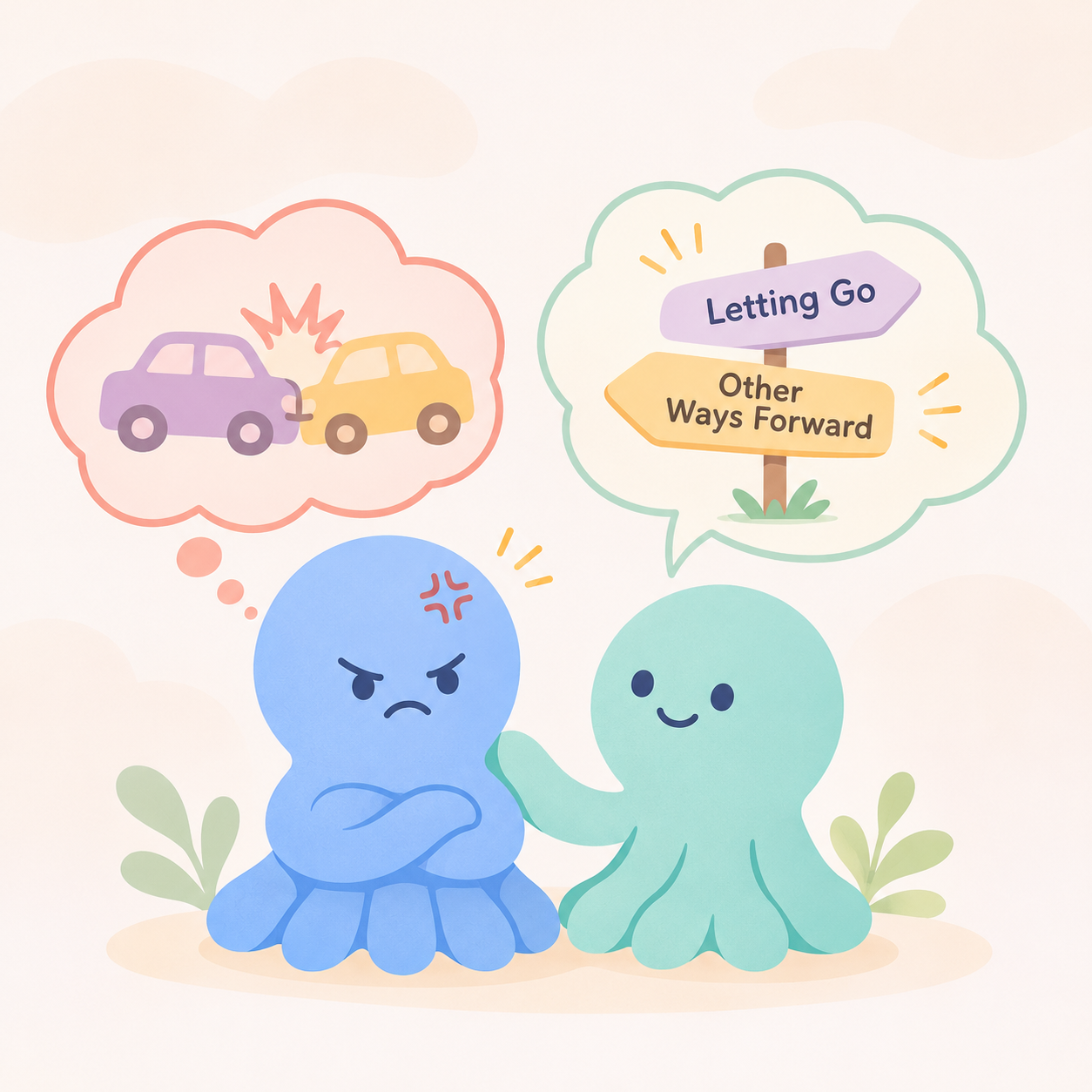
It’s a strange thing, the way a date can sneak up on you. You’re going about an ordinary day, and then you glance at the calendar and realise it’s been one year, or three, since the crash. Your body seems to know before your mind does. Your shoulders are tighter, your patience is thinner, and a name or a face you’ve worked hard not to think about is suddenly sitting at the front of your mind, along with a feeling that hasn’t aged a day: anger.
If you’ve ever found yourself wishing the other driver would feel even a fraction of what you’ve been through, or felt a hot, bitter flash when you see a car like theirs, you may have kept it to yourself. It doesn’t sound like the kind of thing you’re supposed to say out loud. But anger toward the person who caused your accident is one of the most common feelings people carry afterwards, and it deserves a more honest conversation than it usually gets.
The Date on the Calendar
Anniversaries can bring everything back in a way that surprises people. You might feel completely steady for months and then wake up on that day with a heaviness you can’t explain. Some people replay the moment, some feel restless or irritable, and some feel nothing until the evening, when a quiet sadness settles in. The anger, if it’s there, tends to arrive with a sharp edge, and it can feel just as fresh as it did in the first weeks.
Ordinary days can do it too. A car the same colour as theirs pulls up at the lights and your stomach tightens. A news story about a crash comes on while you’re making dinner. Someone at work mentions a near miss on the highway and laughs about it, and you smile politely while something hot rises in your chest.
Even the road can bring it back: a driver tailgating you on the highway, a screech of brakes in a parking lot, or the quiet dread of a left turn at a busy intersection. Your body reacts before your mind has had time to explain why.
What makes it harder is that, to everyone else, it looks like time has passed. You’re walking, working, driving again, and people say you look great and they mean is kindly. But “fine” on the outside and “fine” on the inside are two different things, and the gap between them can feel lonely. If you’re surprised you’re still angry after all this time, it might help to know there’s no expiry date on it. It usually means something big happened to you, and it hasn’t yet been fully acknowledged.
Everyone Wants You to Let It Go
At some point, someone will tell you to let it go. They’ll say holding onto anger only hurts you, that forgiveness is for your own peace, that you should move on. It’s usually said with love. But for a lot of people, hearing it feels like being asked to wave away the thing that mattered most. When you were hurt through no fault of your own, being told to stop being angry can feel like being told your experience wasn’t that serious.
And there’s something unfair in the timing. The person who caused the accident may have gone on with their life, barely changed, while you’ve been dealing with appointments, pain, paperwork, and a mind that still flinches at brake lights. Being asked to be gracious on top of all that can feel like one more thing demanded of you, and you may well think, I didn’t ask for any of this. Why do I also have to be the one who lets it go?
It can also come up in everyday conversations. A relative says, “At least you’re okay,” or a friend tells you everything happens for a reason, and you nod because there’s no easy reply. Each of those comments is meant kindly, and each can leave you feeling a little more unseen. After a while, many people stop bringing it up at all, which only makes the anger feel heavier because it has nowhere to go.
Here’s something worth saying plainly: you don’t have to forgive anyone to recover. Forgiveness can be a meaningful path for some people, and it’s completely fine if it never becomes yours. Peace and forgiveness aren’t the same thing, and you can work toward one without ever arriving at the other.
What the Anger Is Actually Holding
Anger is rarely just anger. It’s more like a guard standing in front of softer, more fragile feelings. Underneath it there’s often the memory of how frightening the moment was, and the awareness of how quickly everything could have gone differently. That awareness can be hard to shake. Your mind returns to the what-ifs, to the split-second reactions, to the thought that one small difference could have changed everything, and the anger rises to protect you from feeling how scary that is.
It can also be holding helplessness. You did everything right, or you were simply in the wrong place at the wrong moment, and nothing you did could have prevented it. That lack of control is deeply uncomfortable, and being angry at a specific person, at least, gives that helplessness somewhere to point.
And it can be holding the wish to be believed. When you look fine, people assume it can’t have been that bad, and you end up wanting to explain, again, how close and how terrifying it felt. It isn’t only about the other driver. It’s about wanting someone to finally say, “That sounds like it was truly terrifying.”
The anger can also be a way of staying connected to how much it mattered. If you felt nothing, it would mean the accident hadn’t touched anything important. The fact that you’re still angry says that your safety, your body, and your life mattered a great deal, and still do.
Often there’s grief in there too: for the life you had before, the person you were, the plans that had to change. When someone says “just let it go,” they’re often asking you to put down something that is guarding all of that. No wonder it doesn’t feel easy.
Okay, Screw Them. Now What?
So let’s say you’re angry, you’re allowed to be, and you’re not going to forgive anyone on command. What next? The aim isn’t to erase the anger. It’s to make sure you’re the one holding the steering wheel, not the anger. Think of it as giving it a seat in the car instead of letting it drive.
A few small things can help. Say it out loud somewhere safe, to a friend, in your car, into a pillow, anywhere it can be spoken without needing a response. Some people write an unsent letter to the other driver, saying everything they’d never actually say, and then put it in a drawer or tear it up. Others find that moving their body helps, like a fast walk or a swim, because anger is physical and it needs somewhere to go. And on the anniversary itself, it can help to plan something gentle: a favourite meal, a comfort couch, a call with someone who knows the date.
If it helps, give the anger its own small window. Ten minutes in the evening, say, where you let yourself feel all of it, write it down, or talk it through, and then do something grounding afterwards, like making tea or stepping outside for some air. Outside that window, when it surfaces, you can tell it, not now, I’ll make time for you later. It keeps the anger from running through every hour of your day, without pretending it isn’t there.
There’s also a quieter shift that many people find over time. Loosening your grip on the anger isn’t the same as saying what happened was okay. It’s simply deciding that the other person doesn’t get to take up space in your mind every day. You can believe they were wrong and still choose to stop carrying them everywhere you go. That’s not letting them off the hook. It’s taking your own life back, a little at a time.
Finding Someone Who Gets It
One of the hardest parts of this kind of anger is how isolating it feels. You might not want to say it at the dinner table, or burden friends who have never been through anything similar. A counsellor is a place where it can be said without judgment, and without anyone rushing to talk you out of it. Good counselling doesn’t push forgiveness. It gives you room to be as angry as you actually are, to understand what’s underneath it, and to figure out what you want to do with it, at your own pace.
For many people, it helps just to have someone who understands what a collision does to a person, someone who doesn’t need it explained and doesn’t flinch at the intensity of it. Hearing “that makes sense” from someone who truly means it can loosen something that’s been clenched for years.
It’s also worth reaching out if the anger is starting to affect other parts of your life. If it’s disrupting your sleep, spilling into relationships, making it hard to drive or concentrate, or keeping you awake replaying the same moments, that’s a good sign it’s time to have someone alongside you. Needing support with this doesn’t mean you’re handling it badly. It usually means you’ve carried it for a long time.
If you’re in Alberta and carrying anger from an accident, whether it happened last month or three years ago, you can reach out through The Minds Matter, read about MVA counselling in Alberta, or see whether our MVA Recovery Program feels like a good fit. You don’t have to let it go. You just don’t have to carry it by yourself.