
CBT, EMDR, Hypnotherapy, or Somatic Therapy: What Type of Mental Health Therapy Works Best After a Car Accident?
13 Jun 2026
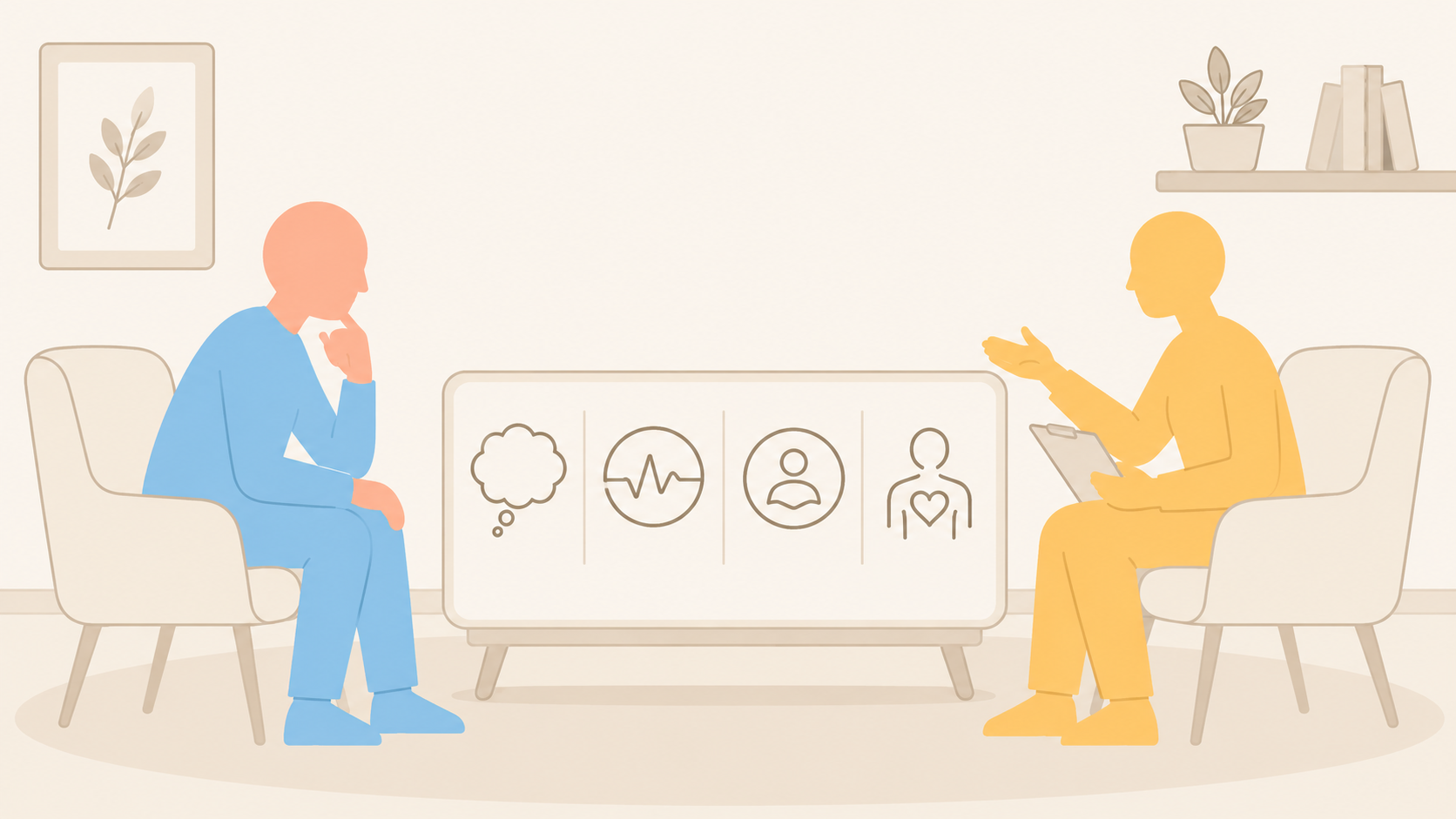
One of the more interesting changes I’ve noticed over the last few years is that clients are becoming much more informed about mental health.
People are reading articles.
They’re listening to podcasts.
They’re watching therapists on YouTube and TikTok.
They’re asking ChatGPT questions at 11 PM when they can’t sleep.
And honestly, I think that’s a good thing.
People are asking thoughtful questions about their mental health instead of suffering in silence and hoping things magically improve on their own.
At the same time, all of this information has created a new problem.
Every week, I see people searching for therapists after a car accident and specifically asking for a CBT therapist, an EMDR therapist, a hypnotherapist, or a somatic therapist.
And every time I see those posts, I find myself wondering:
How did you decide that’s the therapy you need?
Did somebody recommend it?
Did ChatGPT suggest it?
Did a friend tell you it changed their life?
Did you hear a therapist talking about it on Instagram?
Because while therapy approaches absolutely matter, there is a question that I think matters even more:
Do you actually know what problem you’re trying to solve?
I don’t mean that in a critical way.
I mean it genuinely.
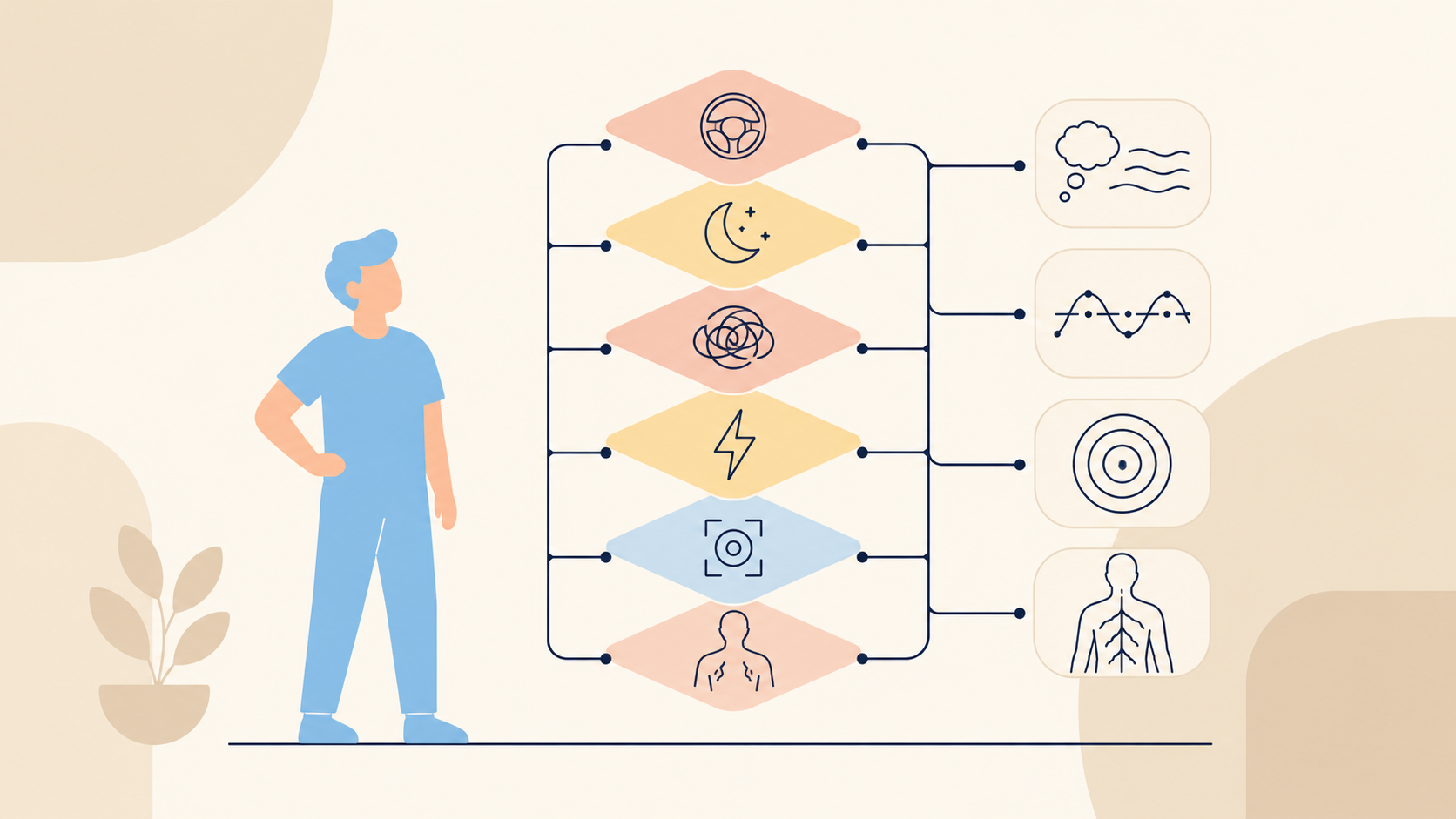
Because after a car accident, most people are not experiencing one neat, isolated concern.
They’re usually experiencing several things at once.
They might be thinking about the accident more than they expected.
They might be sleeping differently.
They might feel unusually tense while driving.
They might find themselves becoming irritated more easily.
They might feel emotionally overwhelmed.
They might notice that concentrating at work takes more effort than it used to.
They might keep telling themselves they’re physically okay while simultaneously feeling like something isn’t quite the same.
When all of those things start showing up together, it can be difficult to know whether you’re looking for CBT, EMDR, hypnotherapy, or simply somebody who understands what you’re going through.
And honestly, that’s where I think many people get stuck.
The Problem With Shopping for Therapy Like You’re Shopping for a Phone
Imagine walking into a phone store and announcing:
“I need the newest charging cable.”
The salesperson might reasonably ask:
“What’s wrong with your phone?”
Maybe the charging cable is the problem.
Maybe it isn’t.
Maybe the battery is damaged.
Maybe the charging port is blocked.
Maybe the phone isn’t turning on for an entirely different reason.
The point is that understanding the problem usually comes before choosing the tool.
Therapy works in a similar way.
A lot of people start by choosing the tool.
They decide they need EMDR.
Or CBT.
Or hypnotherapy.
Or somatic therapy.
But often, they haven’t yet had a meaningful conversation about what the accident actually changed for them.
And that conversation is usually where the answer begins.
So What Do These Therapy Approaches Actually Do?
Let’s demystify some of the terminology.
CBT, or Cognitive Behavioural Therapy, generally focuses on the relationship between thoughts, emotions, and behaviours.
For example, if somebody begins avoiding driving after an accident because they feel anxious, CBT might help explore how those thoughts, feelings, and behaviours are influencing one another.
EMDR is often used when a traumatic experience continues to feel emotionally charged, vivid, or unfinished. It is commonly associated with trauma processing and helping people work through distressing memories.
Somatic approaches focus more heavily on the nervous system and the body. They are often interested in how stress, fear, hypervigilance, and tension are experienced physically rather than only cognitively.
Hypnotherapy can be used in a variety of ways depending on the therapist. It is often used to work with anxiety, confidence, habits, emotional responses, and the relationship between conscious and unconscious patterns.
The important thing to understand is that these approaches are not competing against one another.
They are simply different ways of understanding and supporting human experience.
The problem is that social media, online discussions, and sometimes even AI-generated answers can make it seem as though finding the right therapy is like finding the correct answer on a multiple-choice test.
It usually isn’t.
Why ChatGPT Can’t Fully Answer This Question
As somebody who regularly uses AI tools myself, I think they can be incredibly useful.
You can ask:
“What therapies help after a car accident?”
And you’ll probably receive a thoughtful answer.
You’ll likely see CBT.
EMDR.
Somatic therapy.
Mindfulness-based approaches.
Hypnotherapy.
And many others.
The challenge is that AI is very good at providing information.
It is less effective at understanding nuance.
It doesn’t know whether your biggest challenge is driving anxiety, emotional overwhelm, sleep disruption, irritability, passenger anxiety, guilt, fear, grief, or simply feeling different from the person you were before the accident.
It doesn’t know what happened.
It doesn’t know how the accident affected you.
And it certainly doesn’t know which therapist feels like the best fit for your personality and goals.
That’s where a real conversation becomes important.
Most Therapists Don’t Practice Inside One Box
This is another misconception that catches people by surprise.
Clients often imagine therapy as though every therapist belongs to a single category.
The CBT therapist does CBT.
The EMDR therapist does EMDR.
The hypnotherapist does hypnotherapy.
The somatic therapist does somatic work.
In reality, most experienced therapists are much more flexible than that.
A therapist may draw from several different approaches depending on what the client is struggling with.
Because human beings do not arrive in therapy neatly organized by modality.
People bring fear, frustration, uncertainty, relationship stress, driving anxiety, sleep disruption, existential questions, and practical recovery concerns all at the same time.
Good therapy often involves understanding the whole picture before deciding which tools make the most sense.
What Should You Ask During a Consultation Call?
This is probably the most practical section of this article.
If you’re searching for a therapist after a car accident, I would spend less time asking:
“Do you offer EMDR?”
And more time asking:
“How would you approach someone with concerns similar to mine?”
That question tells you much more.
You might also ask:
- What kinds of motor vehicle accident concerns do you commonly work with?
- What therapeutic approaches do you tend to draw from?
- How do you decide which approach is appropriate?
- What does recovery typically look like in your practice?
- What should I expect during the first few sessions?
You’re not looking for the therapist with the most impressive collection of acronyms.
You’re looking for somebody who understands your concerns and has a clear plan for helping you navigate them.
So What Approach Do I Use?
Clients occasionally ask me whether I use CBT, hypnotherapy, emotion-focused therapy, somatic approaches, solution-focused therapy, or something else.
The honest answer is that recovery after a car accident rarely fits neatly into a single therapeutic model.
My approach is integrative, meaning I draw from a variety of evidence-informed therapeutic approaches based on each client’s needs rather than following a single model.
My work is primarily emotion-focused and incorporates elements of parts work, somatic awareness, solution-focused strategies, mindfulness, hypnotherapy, and experiential approaches.
In practice, this means we don’t just focus on symptom reduction.
Together, we explore the emotions, patterns, beliefs, and experiences that may be contributing to what you’re currently struggling with, while also developing practical tools that support change in everyday life.
If somebody is struggling with driving anxiety, we may spend time understanding the fear response while building confidence behind the wheel.
If somebody feels emotionally overwhelmed by the accident, we may spend more time processing what happened and understanding its impact.
If somebody’s nervous system feels constantly on guard, we may incorporate more mind-body awareness and regulation strategies.
The goal isn’t to force every client into the same approach.
The goal is to understand what the accident changed and respond accordingly.
So What Type of Therapy Works Best After a Car Accident?
The honest answer is probably less satisfying than people expect.
There isn’t one therapy approach that owns accident recovery.
CBT can help.
EMDR can help.
Somatic approaches can help.
Hypnotherapy can help.
And often, several of these approaches can be useful at different stages of recovery.
Which is why I think the more complete question isn’t:
“What type of therapy works best after a car accident?”
The more complete question is:
“What type of therapy works best for the specific ways this accident has affected me?”
Once you understand that answer, choosing a therapist becomes much easier.
And in many cases, that clarity starts with a conversation rather than a modality.

Anjali Nagda
Anjali Nagda is the Founder and Lead Clinician at The Minds Matter. She is a Canadian Certified Counsellor (CCC) and Registered Clinical Counsellor (RCC), offering virtual counselling to adults across Canada.
Related Blogs
No related blogs available.