
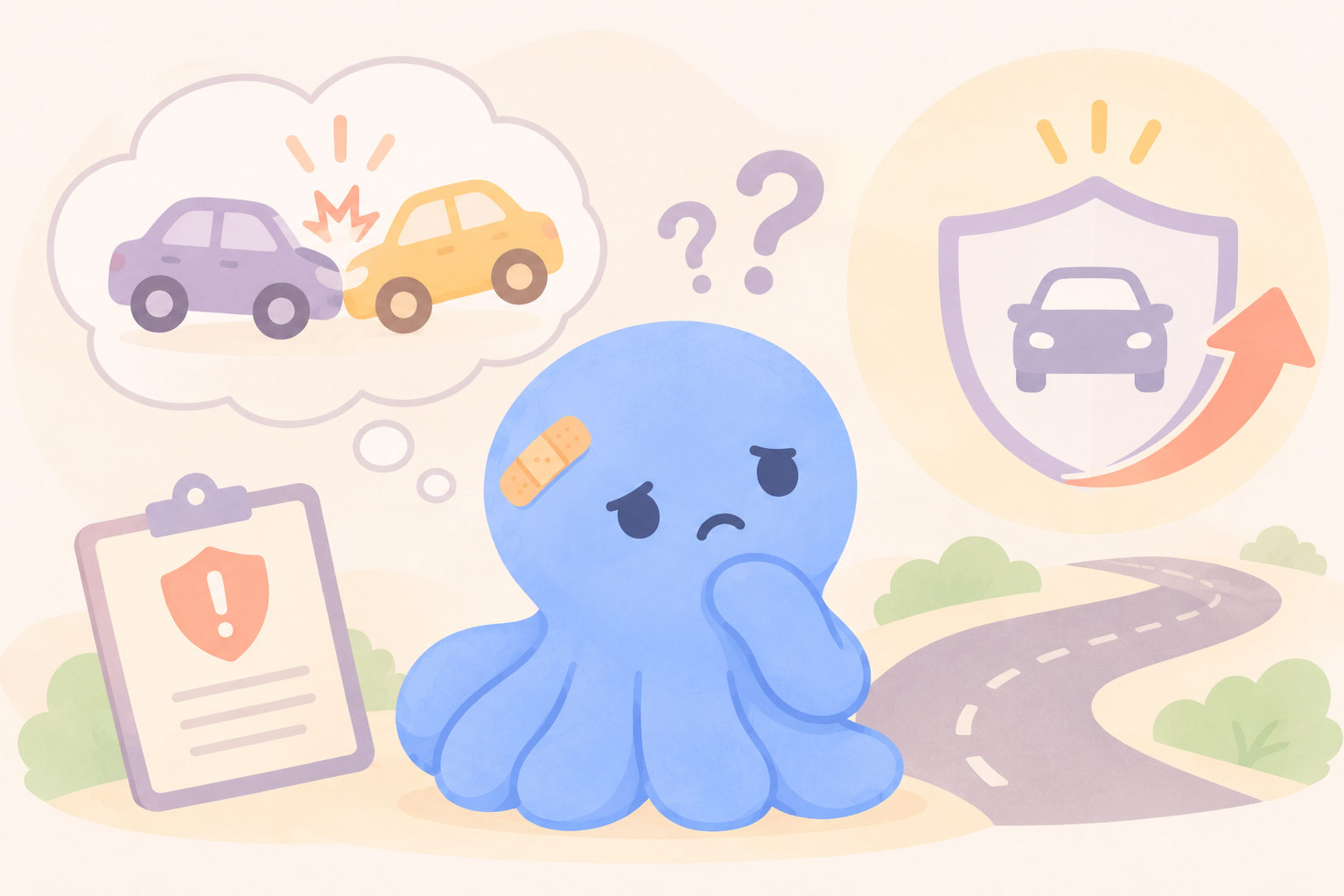
Most people think of recovery after a car accident as a physical project, the physio, the follow-up appointments, the slow return of strength. It makes sense, because that's the part you can see. But there's another side that's easier to miss, and it travels with you every time you get back in the car. It's what the accident left behind in your mind, and it can quietly shape how you drive.
Psychological symptoms after a collision are common, and they don't always fade as quickly as the bruises. For many people they show up in everyday ways, like a tight chest at an intersection or a flash of dread when a car brakes suddenly. So it's worth asking an honest question. Can the way we feel after an accident influence how we drive?
(Please read this as information, not a warning. The aim isn't to cause fear or to keep anyone off the road, only to explain how an accident can affect the way we feel behind the wheel, and where support can help.)
The Mind Doesn't Stay in the Passenger Seat
Driving looks simple from the outside, but it asks a lot of your mind. You're scanning mirrors, judging speed and distance, reading other drivers, and making hundreds of tiny decisions every minute, mostly without noticing. After an accident, some of that automatic ease can slip. Your attention may start to pull in two directions, one part watching the road and another part braced for something to go wrong. It's a bit like carrying a full tray across a busy room, you can do it, but it takes concentration, and you notice the effort when something jostles you.
Many people describe a kind of heightened alertness. Every set of brake lights feels significant. Every car in the next lane seems a little too close. You grip the wheel tighter than you need to, and finish a twenty-minute drive feeling as though you've run a race. That alertness is the mind trying to keep you safe, but it can be tiring, and tired attention is not the same as sharp attention.
Thoughts can drift uninvited, too. At a red light, on a long straight stretch of highway, or on a familiar road you drive every day, a memory of the accident may flicker in. For a moment your mind is somewhere else, even though your eyes are on the road. Most people recover their focus quickly, but it can be unsettling, and it's one of the reasons driving can feel so different afterwards.
Attention is also a limited resource. When part of your mind is busy scanning for danger or managing worry, there's simply less of it left over for everything else. That doesn't mean something is wrong with you. It means your mind is working harder than usual, and it deserves the same care you'd give a sore muscle.
When Confidence Changes the Way You Drive
Confidence is a bigger part of driving than most of us realise. Before the accident, you probably trusted your own judgement without thinking about it. Afterwards, that trust can wobble, and you may notice changes in your driving. Some people become overly cautious, braking earlier, leaving bigger gaps, hesitating at turns, or driving well below the speed limit. Others rush, wanting to get the trip over with, taking corners faster than they'd like and feeling shaky afterwards. Neither pattern means you're doing it wrong, both are ways the mind tries to feel safe again.
Avoidance is another common and understandable pattern. You might take the longer route to avoid a certain intersection, skip the highway, or stop driving at night or in winter conditions. While this brings short-term relief, driving less means getting less practice, and confidence can gradually drift further away.
If you drive with others, the pressure can feel even greater. Children in the back seat, a partner beside you, or a friend you're giving a lift to can make you more conscious of every decision and more self-critical afterwards. You may feel responsible for everyone's safety in a way that's exhausting to carry.
Then there's everything else your body is carrying. Pain can make it harder to turn your head and check a blind spot. Poor sleep leaves you foggy by mid-afternoon. Some medications can leave you drowsy, and worry makes a mind less able to settle. None of these is a character flaw, and none of them means you're a bad driver. They're simply pieces of recovery that can show up behind the wheel, and they're worth noticing with kindness.
A Drive Through the Day
Think about an ordinary day behind the wheel and notice where the mind might get pulled. You scrape the windshield on a dark winter morning and your shoulders are already tight. You back out of the driveway, checking the mirrors twice, then a third time. At the school zone, a child steps out and your heart jumps, even though the car was nowhere near fast enough to matter. Small moments, each easy to brush off on its own.
Further along, there's the left turn across traffic, where you wait for a gap that's bigger than you used to need. There's the highway on-ramp, where the merge that once felt automatic now takes all your attention. There's the parking lot, where a reversing car makes you flinch. By the time you arrive at work or at an appointment, you've used up a good part of your energy, and the day has barely begun.
Then comes the drive home, when you're already tired. This is often when people notice it most, attention drifting, a mind half-present, and the odd feeling of reaching your street without remembering the last few kilometres. It happens to plenty of drivers, but when you're also carrying the aftermath of an accident, it can feel more worrying, and it's a good reason to treat your energy on the road as something worth protecting.
What We Know, and What We Don't
It's worth being clear about what research does and doesn't say. We can't claim that unresolved psychological distress makes another accident more likely. That hasn't been established, and it would be unfair to scare anyone with it. Driving is shaped by many things at once, including road conditions, other drivers, fatigue, and plain luck, and nobody can draw a straight line from one feeling to one outcome.
What we can say is that the pieces are connected. Psychological symptoms after a crash are common, and they can affect attention, confidence, and behaviour, all of which matter on the road. Anxiety can narrow your focus, tiredness can dull your reactions, and avoidance can shrink the practice that keeps skills sharp. Taken together, it's reasonable to say that looking after your mental wellbeing is part of looking after how you drive.
It's also worth remembering how common this is. Many people feel on edge for a while after a crash, and most of them are careful, responsible drivers who simply need time and the right support. Feeling nervous behind the wheel isn't a sign that you're unsafe. For many people, it's a sign that they take driving, and the people around them, seriously.
That also means this isn't about blame or about being told you're dangerous. It's about recognising that recovery has more than one part, and that road safety and emotional recovery can support each other. Paying attention to how you feel behind the wheel isn't an overreaction. It's a sensible kind of care, for you and for the people who share the road with you.
Getting Back Behind the Wheel With Support
If driving has felt different since your accident, a few gentle steps can help. Plan trips for times when you feel rested and the roads are quieter, and build up gradually, starting with short, familiar routes before trying the highway. If you notice your thoughts drifting or your body tensing, pull over somewhere safe, take a few slow breaths, and let the wave pass before carrying on. If you're unsure whether pain, medication, or poor sleep is affecting your driving, it's worth raising it with your doctor or care team, since they're best placed to advise you.
It also helps to talk about it. Many people never mention how driving feels to anyone, because it seems small or embarrassing, and it can sit quietly for months. Saying it out loud to a friend, a family member, or a professional often takes the edge off. And if the nerves, the avoidance, or the intrusive memories keep showing up, that's a good reason to reach out for support rather than waiting for them to fade on their own. It can also help to give yourself permission to go slowly. Choosing a quieter route, leaving ten minutes earlier so you're not rushing, or asking someone to drive when you're particularly drained are sensible choices, not signs of failure. Many people find that a few small adjustments make driving feel more manageable, and manageable drives are what rebuild confidence over time.
A counsellor who works with people after car accidents can help you make sense of what you're feeling, build practical ways to settle your mind and body, and work towards driving with more ease. It isn't about being pushed back onto the road before you're ready. It's about getting your confidence back at a pace that feels manageable.
If you're in Alberta and driving has felt different since your accident, you can reach out through The Minds Matter, read about MVA counselling in Alberta, or see whether our MVA Recovery Program feels like a good fit. Recovering from a road accident is more than physical, and looking after your mind is part of getting safely back on the road.