
If Men Aren’t Talking About Their Feelings — How Are They Carrying What Life Gives Them?
01 Apr 2026

Sometimes in life we get so used to taking care of things that we stop noticing ourselves in the process.
Work.
Responsibilities.
People who rely on us.
Problems that need solving.
Life can slowly become a long list of things that need attention.
And when that happens, the focus moves outward.
What needs to be done.
What needs fixing.
What needs handling next.
This blog is simply an invitation to pause for a moment and turn that spotlight back toward you.
Not to analyze yourself.
Not to put labels on what you’re feeling.
Just to ask a quieter question that many people rarely get to ask:
How am I doing in all of this?
How Many Men Already Create Space (Without Calling It “Processing”)
From what I’ve seen in the men around me — and in the men I’ve worked with — most people already have ways of making space in their lives.
They just don’t always call it emotional processing.
Sometimes that space looks like:
• going for a long drive
• working out or playing sports
• hiking or spending time outdoors
• building or fixing something with your hands
• sitting quietly with a drink at the end of the day
On the surface, these activities may look like a distraction.
But very often they are something else.
They are moments where the mind finally has room to breathe.
When you step away from constant demands, your thoughts begin to settle.
Things that were running quietly in the background start to come into view.
Not dramatically.
Just in small realizations.
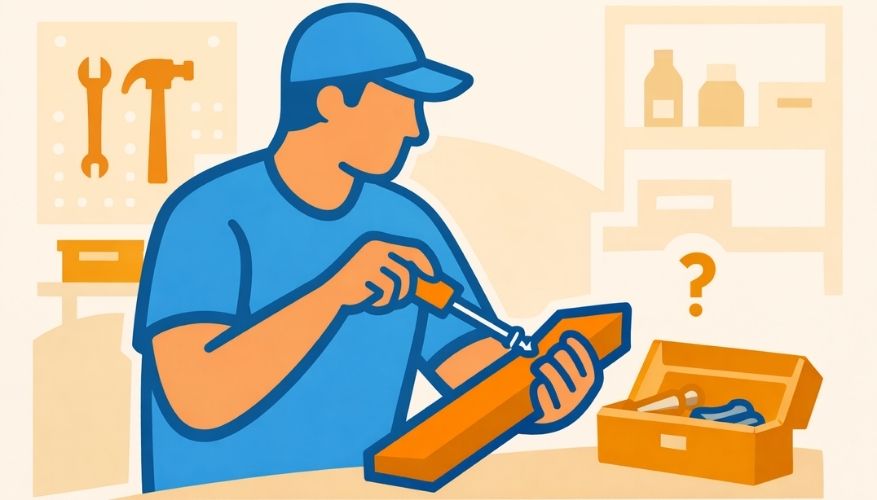
A Small Shift That Can Change These Moments
Here’s the small shift I often invite men to experiment with.
You don’t have to change the activity.
You don’t need to sit down and have a deep emotional conversation.
Just bring a little intention into moments that already exist in your life.
For example:
If you’re driving, instead of only thinking about what needs to happen tomorrow, you might ask yourself:
What do I actually need more of right now?
If you’re playing a sport or working out, you might notice:
How does my body feel today?
If you’re sitting quietly at the end of the day, you might ask:
Did I take care of myself at all today?
These are not heavy questions.
They’re simply ways of bringing the spotlight back to yourself for a moment.
And sometimes that small shift changes more than people expect.
Why Self-Awareness Matters
Self-awareness doesn’t mean analyzing yourself all the time.
It simply means understanding how life affects you.
Everyone has patterns.
Some people lose their appetite when they’re stressed.
Others start eating more.
Some people become quiet when they’re overwhelmed.
Others become restless or irritable.
When you start noticing these patterns, something important happens.
Life becomes easier to navigate.
You start recognizing the signals your own mind and body send you.
And that awareness helps you respond to life more intentionally.
This is one of the foundations of men’s mental health — not constant emotional analysis, but understanding how life impacts you.
When Support Becomes Useful
For many men, the ways they already process life are enough.
For others, there are moments when something feels heavier than usual.
Stress builds.
Pressure increases.
Sleep becomes harder.
Patience becomes shorter.
That’s often when men’s mental health counselling can become useful.
Not because something is “wrong.”
But because it creates a space many people don’t have anywhere else.
A place where you can step outside the roles you carry every day.
A place where the focus can be on you for a while.
One Question Worth Asking Yourself
If you take nothing else from this blog, here’s one question that might be worth sitting with from time to time:
What do I want right now?
Not what needs to be solved.
Not what everyone else needs.
Just:
What do I want?
For many men, that question hasn’t been asked in a very long time.
And sometimes, simply asking it is where clarity begins.
Support for Men at The Minds Matter
At The Minds Matter, I offer counselling that includes dedicated support for men’s mental health in Canada.
The goal is simple.
To create a space where men can slow down, reflect, and understand what they’ve been carrying — without pressure, judgment, or expectations.
Through a collaboration with the TELUS Health program, men in several Canadian provinces can also access two complimentary virtual counselling sessions if they do not currently have counselling coverage.
Sometimes people just need a starting point.
If you’re curious, you’re welcome to learn more about the Men’s Mental Health Program at The Minds Matter or book a short consultation call.
And if not, that’s okay too.
Even taking a moment to ask yourself how you’re doing is already a meaningful step.
Author
Lead Clinician — The Minds Matter
Virtual counselling services across Canada supporting individuals navigating stress, life transitions, and emotional wellbeing.

Anjali Nagda
Anjali Nagda is the Founder and Lead Clinician at The Minds Matter. She is a Canadian Certified Counsellor (CCC) and Registered Clinical Counsellor (RCC), offering virtual counselling to adults across Canada.
Related Blogs
No related blogs available.