
Why Am I More Nervous as a Passenger Than a Driver After My Accident?
13 Jun 2026
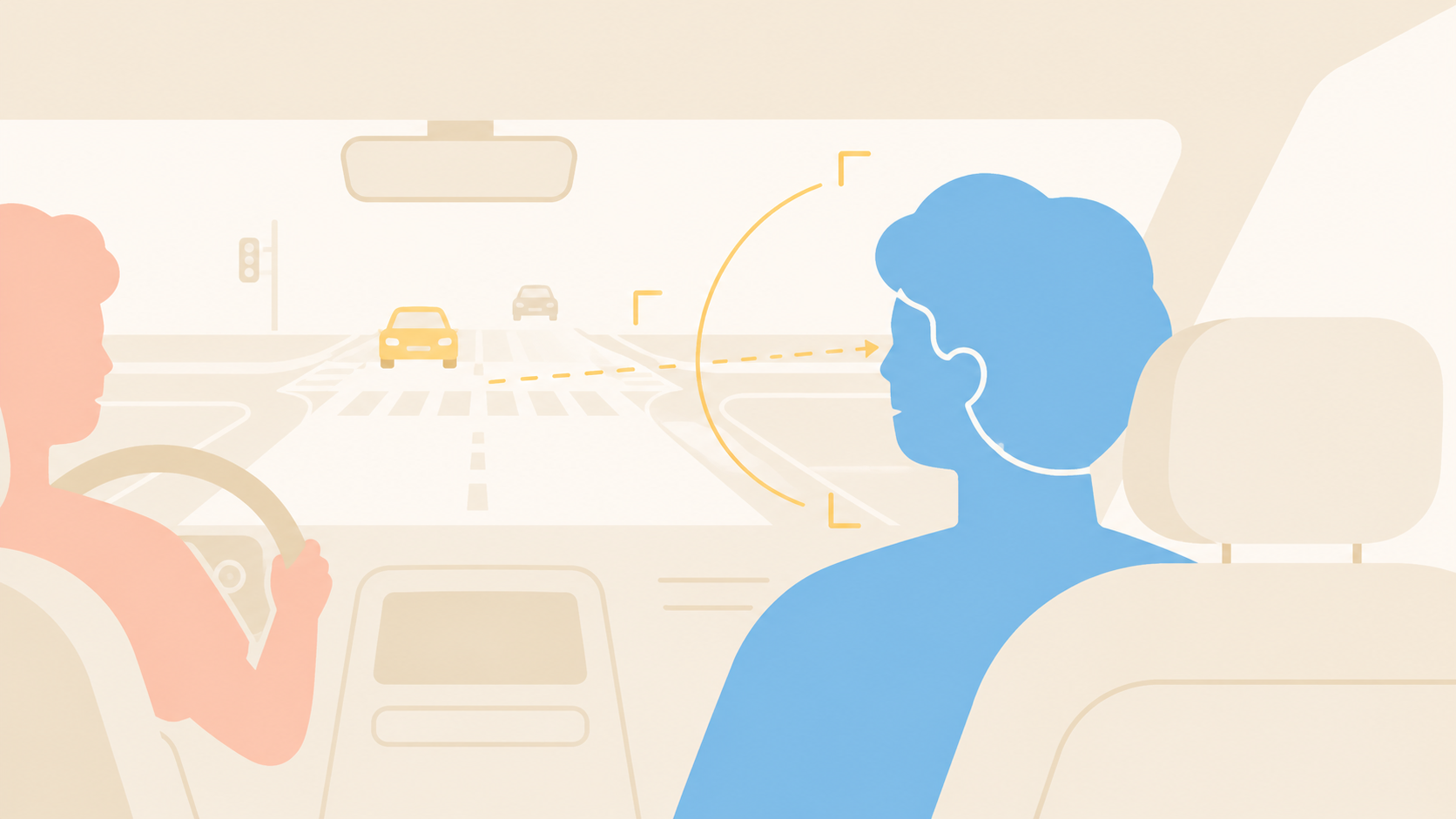
A client said something to me recently that has stayed with me ever since.
They said, “If I’m going to die, I want it to be my fault, not somebody else’s.”
Now, before anybody rushes to interpret that literally, what struck me wasn’t the fear in the statement. It was the frustration.
Because what they were really describing was how differently they felt sitting in the passenger seat after their accident.
Before the accident, being a passenger was effortless. They could look out the window, answer a text, choose the music, think about their day, or have a conversation without giving much thought to the driving itself. The person behind the wheel was driving, and they were simply along for the ride.
After the accident, something changed.
Now they find themselves watching everything.
Not because they want to. Not because they believe every driver is dangerous. Not because they have suddenly become a critical or controlling person.
But because once you’ve experienced how quickly things can go wrong on the road, it becomes much harder to sit back and assume that everything will be fine.
They notice vehicles approaching intersections before anyone else in the car seems to. They notice when somebody changes lanes abruptly. They notice when a driver brakes later than they would have. They notice the pickup truck weaving through traffic three cars ahead. They notice the person looking down at their phone at a red light.
And what makes it even more exhausting is that most of these things were probably happening before the accident too.
The roads haven’t changed nearly as much as their relationship to the roads has changed.
A lot of people assume passenger anxiety means being afraid of cars. In my experience, that isn’t usually what people are describing. What they’re describing is the discomfort of having seen firsthand how quickly an ordinary day can become an extraordinary one.
Before the accident, driving may have felt routine. After the accident, driving carries information it didn’t carry before. Your mind now knows something that it didn’t know quite so viscerally in the past.
It knows that accidents happen to ordinary people.
Not reckless people.
Not careless people.
Ordinary people.
The kind of people who were simply trying to get home from work, pick up groceries, or make it to an appointment on time.
And once that realization settles in, it becomes much harder to completely switch off as a passenger.
Passenger Anxiety Is Often About Helplessness More Than Fear
One of the things I’ve noticed about anxiety in general is that it usually wants us to do something.
When we’re worried about an exam, we study.
When we’re worried about finances, we make a plan.
When we’re worried about our health, we book an appointment.
Anxiety tends to move us toward action because action helps us feel like we’re responding to the problem.
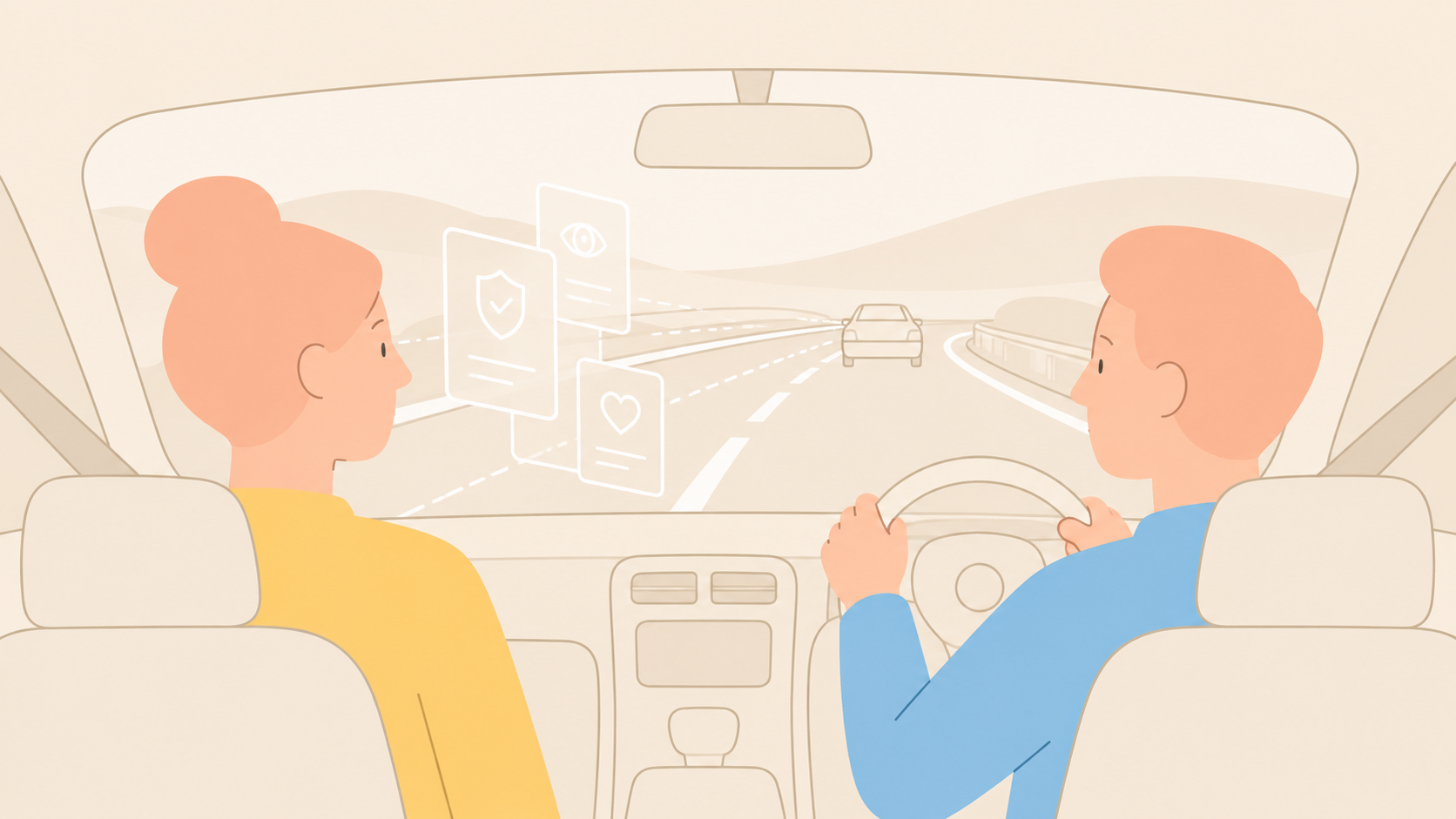
Being a passenger after an accident creates a strange situation because the anxiety is still there, but many of the actions that would normally help you feel safer are no longer available to you.
If you’re driving, you can decide how much distance you leave between yourself and the car ahead. You can slow down if conditions feel uncomfortable. You can choose a route that feels easier. You can adjust your driving to match how you’re feeling.
As a passenger, all of those decisions belong to somebody else.
That doesn’t mean the other person is driving badly.
It simply means you’re being asked to trust someone else’s judgement at a time when your own sense of safety may already feel shaken.
And that can feel surprisingly vulnerable.
I think that’s what my client was trying to describe.
Not that she wanted to be responsible for an accident.
But that driving gave her a sense of participation in her own safety.
Being a passenger required trust.
And after an accident, trust can suddenly feel much harder than it used to.
The World Starts Looking Different
One of the strangest parts of recovering from an accident is that the environment around you may remain exactly the same while your experience of it changes completely.
Imagine you’re driving through Edmonton’s River Valley on a beautiful summer evening. A vehicle comes up behind you and passes the car you’re travelling in.
Before the accident, you may have barely noticed it.
After the accident, that exact same moment can feel very different.
The vehicle may seem closer.
It may seem faster.
It may feel more aggressive.
Not necessarily because it is any of those things, but because your attention is already searching for signs of danger.
When our minds become focused on safety, our perception changes with it.
We’re quicker to notice movement.
Quicker to notice risk.
Quicker to notice uncertainty.
The interesting thing is that many people interpret this as proof that they’re becoming irrational.
I don’t think that’s what’s happening.
I think their nervous system is doing exactly what it was designed to do.
It’s paying attention.
The challenge is that after an accident, the volume on that attention can become turned up much higher than it used to be.
The Phantom Brake Pedal
I think almost everybody who has experienced passenger anxiety knows exactly what I’m about to describe.
You’re sitting in the passenger seat and the driver approaches an intersection.
Nothing dangerous is happening.
Traffic is moving normally.
The driver is paying attention.
And yet, somewhere along the way, you notice your foot pressing into the floorboard.
Trying to help.
Trying to participate.
Trying to brake a vehicle that you have absolutely no control over.
I’ve had clients laugh when they notice themselves doing this because it feels ridiculous.
But when you stop and think about it, it actually makes perfect sense.
Your body has learned that intersections can matter.
Your body has learned that things can change quickly.
Your body has learned that staying alert feels safer than relaxing.
So even though your logical mind understands that you are not driving, another part of you is still trying to contribute.
The phantom brake pedal is one of the clearest examples of the gap that can exist between what we know intellectually and what our nervous system is still trying to catch up to emotionally.
Why Passenger Anxiety Can Create Tension In Relationships
One of the less talked about parts of passenger anxiety is how easily it can spill into relationships.
Because when you’re feeling anxious, it’s natural to start commenting on the things that are making you anxious.
You point out the vehicle that’s getting close.
You mention the driver who seems distracted.
You question whether the lane change was necessary.
You suggest slowing down.
And while those comments often come from a place of fear, they can sometimes land as criticism.
The driver starts feeling micromanaged.
The passenger starts feeling misunderstood.
Both people become frustrated.
What’s interesting is that the argument usually appears to be about driving, but it rarely is.
More often, it’s about safety.
The passenger is trying to reduce anxiety.
The driver is trying to drive.
And unless those two experiences are openly acknowledged, they can end up working against each other.
Sometimes it helps to simply name what’s happening.
Instead of saying, “You’re driving too fast,” it may be more accurate to say, “I’m noticing that I’m feeling really anxious right now.”
Those are very different conversations.
One tends to create defensiveness.
The other tends to create understanding.
Why It Can Feel So Exhausting
A lot of people tell me that they arrive somewhere feeling surprisingly tired after being a passenger.
At first they judge themselves for it.
After all, they weren’t driving.
They weren’t navigating.
They weren’t making decisions.
So why do they feel drained?
What often gets overlooked is how much mental energy goes into constantly scanning for potential danger.
When your attention is monitoring every lane change, every brake light, every intersection, and every vehicle that appears unpredictable, your nervous system is working the entire time.
By the end of the drive, many people aren’t physically tired.
They’re mentally tired.
They’ve spent forty minutes preparing for things that never happened.
And while that preparation may have been completely invisible to everyone else in the vehicle, it still required energy.
What Actually Helps?
One of the biggest shifts I encourage people to make is moving away from judging the anxiety and becoming curious about it instead.
Passenger anxiety isn’t usually trying to make your life difficult.
It’s trying to keep you safe.
The problem is that it’s often operating as though the accident is still much closer than it actually is.
Some people find it helpful to have something grounding with them during longer drives. A warm coffee, a cold drink, a favourite playlist, or even becoming the designated DJ can help give attention somewhere else to rest besides traffic.
Others find it helpful to gradually rebuild confidence through shorter rides, familiar routes, and drivers they trust.
Most importantly, I think it helps to remember that feeling anxious as a passenger does not mean you’re moving backwards in your recovery.
It often means your nervous system is still learning that not every drive is another accident waiting to happen.
And that learning process takes time.
Final Thoughts
If you’ve noticed that being a passenger feels harder than being a driver after your accident, there is a good chance that what you’re experiencing has less to do with cars and more to do with trust, vulnerability, and safety.
Driving allows us to feel involved. It allows us to feel like we can respond if something goes wrong.
Being a passenger asks us to hand some of that responsibility to somebody else.
After an accident, that can feel like a much bigger ask than it once did.
The good news is that many people find this gradually softens with time.
Not because they force themselves to stop caring.
But because their nervous system slowly learns that the accident is no longer happening, even when they’re sitting in the same seat where they once felt most vulnerable.

Anjali Nagda
Anjali Nagda is the Founder and Lead Clinician at The Minds Matter. She is a Canadian Certified Counsellor (CCC) and Registered Clinical Counsellor (RCC), offering virtual counselling to adults across Canada.
Related Blogs
No related blogs available.