
Why Is My Sleep So Bad After the Accident — Even Though I’m Exhausted?
21 May 2026
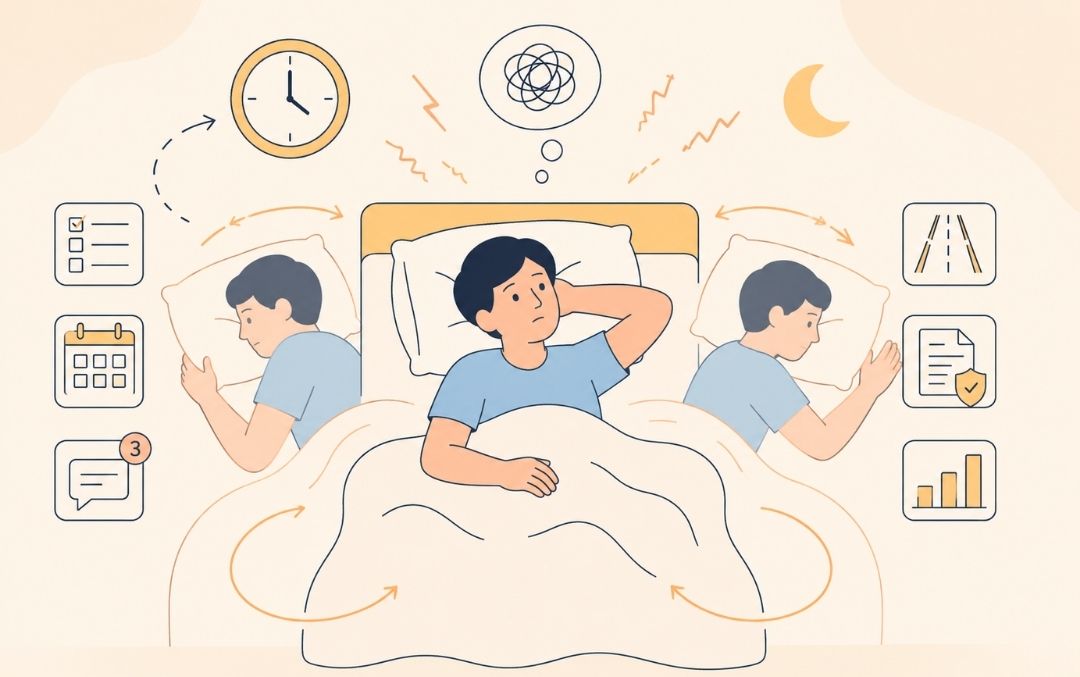
By the time nighttime comes around, most people after a car accident are genuinely exhausted.
The day has already taken a lot out of them. Work still needs attention. Physio appointments need to be coordinated. Calls with insurance and lawyers keep happening in the background. Schedules change. Routines shift. The body is already carrying pain, tension, or fatigue in ways that were not there before.
So when sleep suddenly stops coming naturally on top of all of that, it can become incredibly frustrating.
Especially because many people expect exhaustion to automatically lead to sleep.
But after a motor vehicle accident, that is not always what happens.
For a lot of high-functioning people, nighttime becomes the first moment in the day where there are finally fewer distractions — and suddenly the mind and body become much louder than expected.
You lie down hoping your body will finally give in to rest.
Instead, you check the time.
Turn to one side. Then the other.
Stretch your neck. Adjust the pillow. Rub your shoulder. Try to find one position that feels comfortable enough to fall asleep in.
And then the thoughts begin.
“What if I don’t sleep again tonight?”
“Tomorrow is going to be ruined.”
“I’m exhausted. Why can’t I just sleep?”
For many people after a motor vehicle accident, bedtime slowly becomes associated with frustration instead of rest.
And that can feel incredibly defeating when you already feel like you are carrying too much through the day.
Sleep is often where the accident finally catches up with you
During the day, there are distractions.
Appointments. Work. Emails. Calls. Driving. Coordinating schedules. Trying to keep life moving. Trying to continue functioning the way you used to before the accident happened.
And honestly, even that takes effort.
A lot of people are quietly pushing themselves very hard after an accident just to maintain the appearance of normalcy. They are still showing up to work. Still taking care of responsibilities. Still trying to keep up with routines that belonged to a version of themselves before the accident happened.
So when nighttime finally arrives and the world becomes quieter, it is often the first time their mind and body have enough space to fully register what they have been carrying all day.
Pain becomes louder.
Thoughts become harder to outrun.
The mind starts revisiting conversations, responsibilities, recovery timelines, work pressure, financial concerns, driving worries, and uncertainty about the future.
Sometimes people replay the accident itself.
Sometimes they replay how much worse it could have been.
Sometimes they start thinking about consequences they were too busy to think about during the day.
And many people do something very understandable in that moment:
they try extremely hard not to think about it.
They push the thoughts away.
Reach for the phone.
Turn on Netflix.
Scroll until their eyes feel heavy enough to shut down.
But the effort of constantly trying not to think about uncomfortable thoughts is exhausting too.
A lot of people are not just tired from the accident itself.
They are tired from mentally wrestling with everything the accident changed — while simultaneously trying to function like nothing changed at all.
Quietness on the outside often creates restlessness on the inside.
And for high-functioning people especially, this becomes deeply frustrating because they are used to solving problems through effort. But sleep is one of the few things in life that usually gets worse the harder you try to force it.
The strange contradiction people struggle to explain
One of the most common things people say after an accident is:
“I’m exhausted all day. So why can’t I sleep properly at night?”
Because exhaustion and regulation are not always the same thing.
Your body can be physically tired while your nervous system still feels mentally “on.”
After an accident, many people remain in a low-grade state of monitoring without fully realizing it. The body stays slightly braced. The mind stays slightly active. Even at rest, there is often a background sense that something does not feel fully settled yet.
And nighttime is usually where that becomes most noticeable.
This is also where sleep performance anxiety begins creeping in.
People start calculating remaining sleep hours in their head:
“If I fall asleep right now, I can still get five hours.”
Then another hour passes.
Now they are frustrated about not sleeping, anxious about tomorrow, increasingly aware of how exhausted they already feel, and trying even harder to force sleep to happen.
At that point, the pressure around sleep itself starts keeping the nervous system activated.
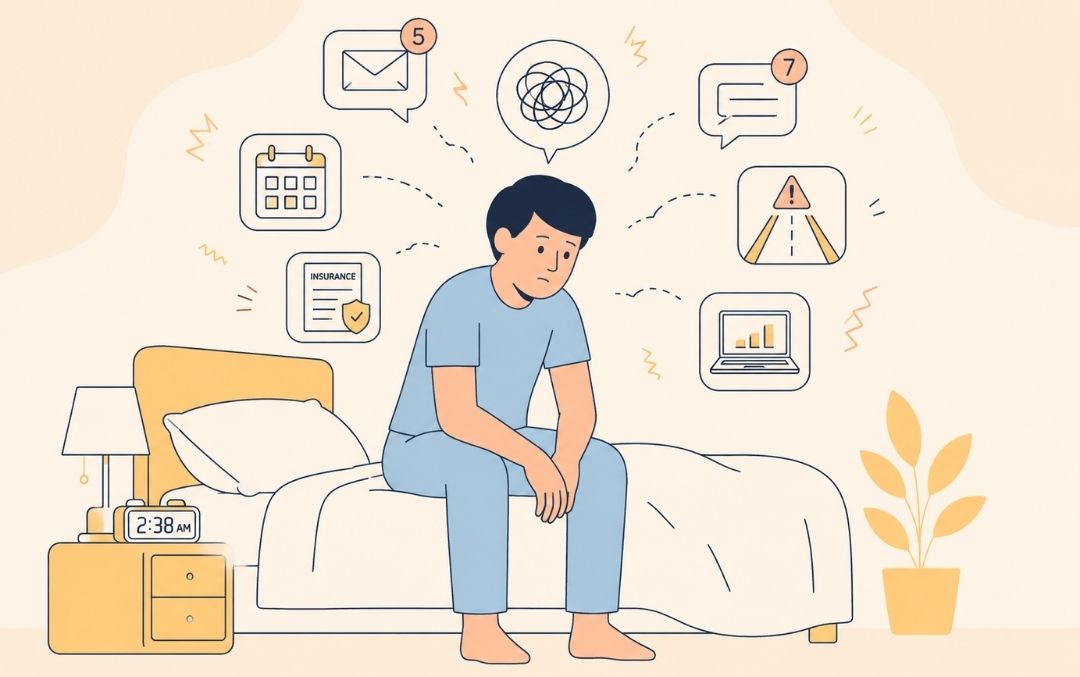
What the body often feels like in bed after an accident
For many people, sleep disruption after an accident is not just mental. The body itself feels difficult to settle.
People describe:
- tightness in the shoulders or neck
- feeling unable to fully relax into the mattress
- constantly switching sleeping positions
- stretching repeatedly in bed trying to create relief
- rubbing painful areas with pressure hoping the discomfort settles enough to sleep
- feeling physically exhausted but internally restless
And because the mind is quieter at night, physical discomfort often becomes more emotionally noticeable too.
During the day, attention is divided across responsibilities. At night, awareness narrows. Suddenly, the discomfort in the body has nowhere to hide.
That can create a difficult cycle where pain affects sleep, poor sleep affects nervous system regulation, and nervous system dysregulation then increases pain sensitivity the following day.
High-functioning people often try to “solve” sleep
This is something I see often with working professionals after motor vehicle accidents in Alberta — especially among healthcare workers, lawyers, corporate professionals, and shift workers trying to maintain demanding schedules.
They do not simply rest.
They optimize.
Research supplements.
Self-prescribe melatonin.
Increase pain medication hoping the drowsiness will help.
Push themselves harder during the day hoping exhaustion will eventually overpower the sleeplessness at night.
Some people even try to tire themselves to the point of collapse because they are desperate to get back to the kind of sleep they used to have before the accident.
And honestly, a lot of people are grieving something very simple:
they miss getting one proper night of sleep and waking up actually feeling rested the next morning.
Not groggy.
Not mentally foggy.
Not already drained before the workday has even begun.
Just rested.
One thing that also gets overlooked is that sleep medication or pain-related drowsiness is not always the same thing as restorative sleep. Sometimes people technically “sleep,” but still wake up feeling mentally heavy, emotionally flat, or physically depleted.
And when that keeps happening repeatedly, people often start losing confidence in their own ability to recover properly.
Summer in Alberta can quietly make this worse
People often associate sleep problems with winter, but Alberta summers create their own challenges after an accident.
The sun stays out until 10 or 10:30 PM. The roads stay active later. People want to maximize the good weather after long winters. There is more stimulation, more social activity, more pressure to stay productive, and more reasons to keep pushing through exhaustion.
And for many people whose nervous system is already struggling to settle after an accident, that extended stimulation makes it harder to slow down properly at night.
Especially for shift workers around Fort McMurray or professionals working cognitively demanding jobs, poor sleep quickly starts affecting concentration, emotional regulation, work performance, patience, and recovery overall.
This is where many people begin feeling trapped in a cycle:
poor sleep increases exhaustion, exhaustion increases irritability, irritability affects functioning, and then nighttime arrives carrying even more pressure to finally sleep properly.
Doom scrolling is often not really about entertainment
One of the most common nighttime coping behaviours after an accident is doom scrolling.
And most people think they are doing it because they “can’t sleep.”
But often, something deeper is happening.
The phone becomes a distraction from silence. A way to stay mentally occupied long enough that uncomfortable thoughts do not fully surface. A way to delay emotional contact with yourself once the distractions of the day disappear.
Because once the scrolling stops, the mind gets quiet enough to notice what the day kept interrupting.
And honestly, many people are not just avoiding sleeplessness.
They are avoiding lying awake alone with thoughts they are trying very hard not to revisit.
The part that often gets missed
A lot of people are told:
“It’ll improve once your body heals.”
And yes, physical pain absolutely affects sleep.
But sleep disruption after an accident is not always only about pain.
Sometimes the mind has not fully settled after everything that happened. Sometimes there is ongoing tension around work, recovery, finances, driving again, or uncertainty about how long life is going to feel this disrupted. Sometimes the body simply stays more alert than it used to, even when the person consciously wants to relax.
And sometimes people are spending enormous amounts of mental energy trying not to think about what happened at all.
Trying not to think about something still keeps your nervous system engaged with it.
That is why many people feel exhausted at night but still unable to fully settle into sleep.
And unless we actually slow down enough to understand what your mind and body are still carrying into the nighttime hours, it becomes very difficult to know what is truly keeping your sleep disturbed.
There is no universal formula for this.
Two people can experience similar accidents and have completely different reasons for why sleep changed afterward.
Which is why the conversation itself matters.
Functioning is not the same thing as feeling rested
A lot of people tell themselves:
“But I’m still functioning.”
And technically, they are.
They are working. Driving. Responding to emails. Taking care of responsibilities. Showing up where they need to show up.
But underneath that functioning, many people are deeply exhausted, emotionally overloaded, physically tense, cognitively strained, and surviving on a nervous system that never fully gets the chance to reset.
That distinction matters.
Because surviving your day is not the same thing as feeling restored by your life.
What support can actually look like
At The Minds Matter, sleep after a motor vehicle accident is not approached as “just insomnia.”
The focus is understanding the broader picture around why your sleep may have changed after the accident — including nervous system activation, pain patterns, nighttime thought cycles, emotional overload, and the pressure many high-functioning people place on themselves to continue functioning normally while exhausted.
Clients often begin with a single MVA counselling session focused on understanding how the accident has impacted their emotional and physical functioning, including sleep.
Support may include nervous system regulation strategies, cognitive approaches for nighttime overthinking, sleep-focused tools, and access to a guided audio library designed specifically for accident-related sleep and nervous system concerns.
Anjali also brings experience working with a wide range of clients navigating sleep disruption in different forms — including professionals, shift workers, high-functioning adults, and clients whose sleep changed significantly after periods of stress, injury, or prolonged overwhelm.
And because Alberta’s insurance landscape is evolving — especially with increasing emphasis on documentation and functional impact — early documentation of ongoing sleep disruption can also become important when sleep begins affecting concentration, emotional regulation, work performance, or overall day-to-day functioning over time.
Closing
Sometimes people think the problem is simply:
“I can’t sleep.”
But often, what they are really struggling with is that their mind and body have not yet found their way back to a rhythm that feels natural, restorative, and consistent again after the accident.
And that usually takes more than physical recovery alone.
If your nights have started feeling heavier, more restless, more frustrating, or more mentally exhausting than they used to, you are not imagining it.
A lot of high-functioning people continue pushing through their days while quietly struggling through their nights.
And sometimes the first real shift happens when you stop treating the sleep problem like something you simply need to overpower — and start understanding what your system may actually need in order to settle again.
FAQs
Why am I so exhausted but still unable to sleep after the accident?
After a motor vehicle accident, physical exhaustion and nervous system regulation do not always move together.
A lot of people are physically tired but mentally still “on.” The body may still feel alert, tense, watchful, or emotionally overloaded even when you consciously want to rest.
That is why many people feel exhausted all day but still struggle to fully settle into sleep at night.
Is it normal to keep thinking about the accident at night?
Yes. Nighttime is often when intrusive or repetitive thoughts become more noticeable because there are finally fewer distractions competing for your attention.
Some people replay the accident itself. Others replay “what if” scenarios, worries about recovery, financial stress, work pressure, or how much life has changed afterward.
And many people spend a huge amount of effort trying to push those thoughts away — which can become exhausting on its own.
Why does bedtime itself start feeling stressful?
For many people, bedtime slowly becomes associated with frustration.
You start worrying about whether you will sleep well. You begin calculating remaining sleep hours. You become aware of how exhausted you already are and how difficult tomorrow will feel if sleep does not happen.
Over time, the pressure to sleep can itself keep the nervous system activated.
This is sometimes referred to as sleep performance anxiety.
Is my sleep problem only because of pain?
Not always.
Pain absolutely affects sleep, especially when certain positions feel uncomfortable or the body feels physically tense at night.
But many people also notice that sleep changes are connected to nervous system activation, mental overload, emotional stress, lifestyle disruption, driving anxiety, work pressure, or the ongoing effort of trying to “hold everything together” after the accident.
Why do I keep doom scrolling at night even when I know it’s making things worse?
For many people, doom scrolling becomes less about entertainment and more about distraction.
The phone helps keep the mind occupied long enough to avoid uncomfortable thoughts, worries, or emotional overwhelm that become more noticeable once the day slows down.
A lot of people are not just avoiding sleep difficulties — they are trying to avoid lying awake alone with everything they have been carrying internally.
Can poor sleep after an accident affect my work performance?
Absolutely.
Poor sleep often affects:
- concentration
- emotional regulation
- patience
- reaction time
- memory
- decision-making
- mental clarity
This is especially noticeable for professionals working cognitively demanding jobs, shift schedules, long driving routes, or high-responsibility roles.
Many people continue functioning outwardly while quietly feeling mentally depleted underneath.
What happens after the first MVA counselling session?
The first session is designed to help you understand how the accident may be impacting your nervous system, sleep, emotional regulation, functioning, and overall recovery.
After the session, you receive a Clinical Snapshot — a structured document summarizing:
- functional impacts
- emotional and nervous system patterns
- screening indicators where appropriate
- a non-diagnostic clinical impression within counselling scope
From there, you can decide whether you would prefer:
- standalone MVA counselling sessions
- or the structured MVA Recovery Program focused specifically on the impact of the accident itself
You can learn more about both options directly through The Minds Matter website.

Anjali Nagda
Anjali Nagda is the Founder and Lead Clinician at The Minds Matter. She is a Canadian Certified Counsellor (CCC) and Registered Clinical Counsellor (RCC), offering virtual counselling to adults across Canada.
Related Blogs
No related blogs available.