
The Grey Zone After a Car Accident — When You’re Not Fine, But Not Badly Hurt Either
08 May 2026
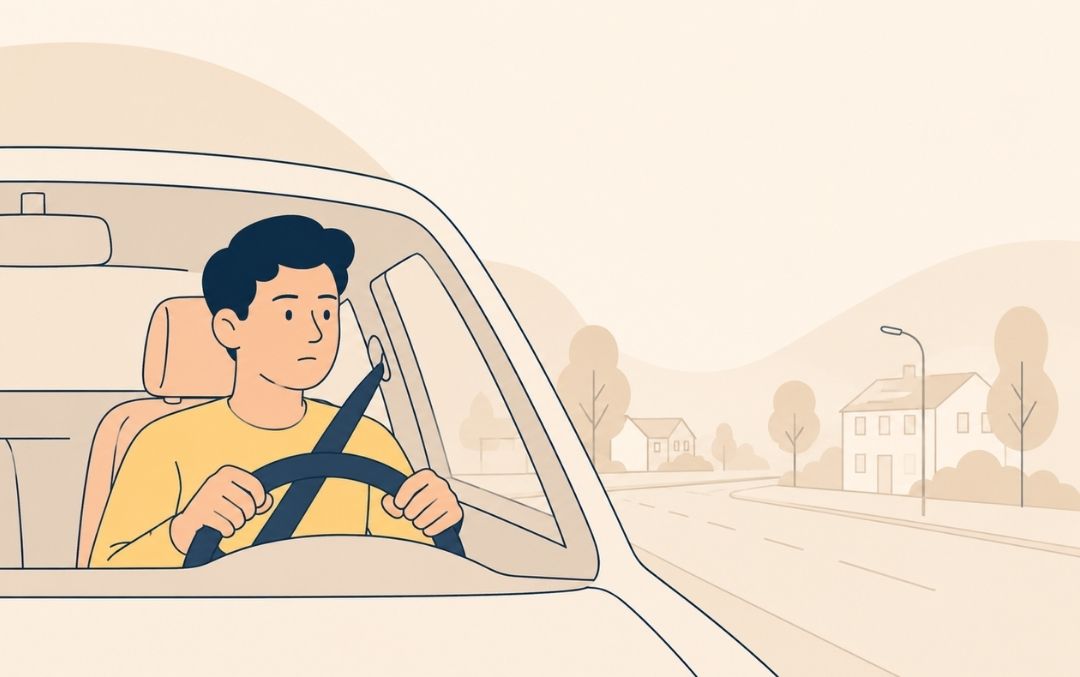
You’re back to your routine.
Work has resumed. Appointments are happening. You’re showing up the way you’re supposed to.
But something isn’t landing.
Not enough to call it serious.
Not enough to stop everything.
Just enough that you notice it—again and again.
You catch yourself thinking:
- “It wasn’t that bad. It could have been worse.”
- “I should probably just move on.”
- “I’m fine… but I’m not fully fine either.”
So you try to get back to how you were before.
And the harder you try, the more confusing it gets.
What this will help you understand
- why this “in-between” state happens after an accident
- how it shows up in real, everyday functioning
- why it often gets brushed off
- and what actually helps you make sense of it
What the grey zone actually feels like
This isn’t about not functioning.
It’s about functioning differently.
You might notice:
- You’re working—but everything takes longer than it should
- You’re reading the same thing twice before it sticks
- You’re switching between tasks, but with more friction
- By mid-day, you feel mentally done
You’re driving—but:
- your hands grip the wheel a bit tighter
- you scan the road more than usual
- certain turns or intersections feel heavier than they used to
You’re around people—but:
- your patience runs thinner
- your energy drops faster
- you pull back sooner than you normally would
Nothing here feels dramatic.
But it’s consistent.
And that’s what makes it frustrating.

The part no one explains clearly
Most people assume:
If I handled the situation, I should feel normal again.
But handling the situation and processing its impact are two different processes.
After an accident, your system prioritizes:
- logistics
- appointments
- getting life moving again
That part often works.
But your system doesn’t always settle just because your schedule does.
And when it hasn’t fully settled, the shift shows up here first:
focus, energy, emotional bandwidth, and baseline functioning
Not dramatically.
Just enough that you know something is off.
What you’re actually trying to get back to
Most people in this phase are chasing something they can’t quite define.
It sounds like:
“I’m trying to get back to normal, but I don’t know where normal is anymore.”
Before the accident, your baseline was automatic.
After the accident, that baseline may have shifted—even slightly.
And now you’re putting in effort to reach something that hasn’t fully recalibrated yet.
That’s where the frustration comes from.
You’re not failing to cope.
You’re trying to function without a clear reference point.
Why this gets missed (especially in Alberta)
Not because it’s unimportant.
But because everything around you demands attention.
Recovery here often looks like:
- coordinating physio or chiro sessions
- calling your insurer or waiting on your adjuster
- managing paperwork
- keeping work and life moving
In cities like Edmonton, where long commutes and busy schedules are already part of daily life, it’s easy to stay in motion and keep pushing through.
In places like Airdrie, where you’re often balancing work, driving, and family responsibilities across locations, stopping to reflect on internal impact doesn’t feel like a priority.
So what happens?
You keep going.
You keep functioning.
And the psychological impact doesn’t get ignored on purpose—it just never gets properly looked at.
What pushing through actually does
If you’re used to being high-functioning, your instinct is simple:
“Just get back to normal.”
So you push.
You override.
You compensate.
And it works—temporarily.
But here’s the problem:
Pushing helps you perform. It doesn’t help you recalibrate.
Over time:
- effort increases
- clarity decreases
- irritability creeps in
- fatigue builds faster
Not because you’re doing something wrong.
But because you’re trying to operate without acknowledging what changed.
What people consistently get wrong about this phase
There’s a quiet belief that:
“If it’s not severe, it’s not worth addressing.”
That’s not how recovery works.
In many cases:
The earlier you understand the impact, the easier it is to stabilize it.
This isn’t about overreacting.
It’s about not overlooking something just because it’s subtle.
What actually helps (without overcomplicating it)
You don’t need to commit to long-term therapy.
You need clarity.
A structured first session helps you:
- identify what has actually shifted
- understand how it’s affecting your functioning
- see patterns you’ve been trying to piece together on your own
Because right now, most of this is sitting in your head—unorganized.
What the Clinical Snapshot actually does
At The Minds Matter, this starts with a structured first session that includes a Clinical Snapshot.
This is a one-page document created by a
Canadian Certified Counsellor and Counselling Therapist (ACTA)
It captures:
- what has changed since the accident
- how those changes are affecting your day-to-day functioning
- patterns across work, driving, energy, and emotional regulation
- baseline indicators using brief, non-diagnostic screening tools
What matters is not just what it contains—but what it allows.
It gives you:
- a clear, structured view of your experience
- language to describe what’s been hard to explain
- an early, credible record of psychological and functional impact
- something you can share with your lawyer or insurer if needed
In many cases, this becomes the first point where the psychological impact is:
not just felt—but clearly captured by a regulated professional
It is not a diagnosis.
It is not a medico-legal opinion.
But it is a structured, professional record of what was happening at that stage of recovery.
And for many people, that moment changes something important:
When you can see the impact clearly, you stop blaming yourself for not “being back to normal.”
You adjust your expectations.
You pace yourself better.
You recover more intelligently.
Closing
You handled the situation.
You did what needed to be done.
But if something still feels slightly off—
that’s not you overthinking.
That’s information.
You don’t need to wait for things to get worse to understand them better.
FAQs
I’m functioning. Can I just ignore this and assume it will pass?
You can. Many people do.
But what often happens is:
- things take more effort than they should
- fatigue builds faster than expected
- you compensate without realizing it
It may not escalate—but it often stays unresolved.
Understanding it early tends to reduce that friction.
Why does it feel like I’m trying harder but getting less done?
Because effort and efficiency are not the same.
After an accident, your system may still be slightly dysregulated.
So you can apply more effort—but still experience reduced clarity, focus, or flow.
That gap is what you’re noticing.
Is this considered a psychological issue?
Not necessarily in a diagnostic sense.
What you’re experiencing is often a functional shift:
- how you focus
- how you regulate energy
- how you respond to stress
It may never become a “clinical condition.”
But it can still affect how you function day-to-day.
What’s the point of addressing something that feels this mild?
Because mild doesn’t mean irrelevant.
Subtle changes, when left unexamined, often become your new normal.
Addressing them early helps you return to baseline more efficiently.
What exactly is a Clinical Snapshot?
A Clinical Snapshot is a structured, one-page document created after your first session with a Canadian Certified Counsellor / ACTA-registered Counselling Therapist.
It outlines:
- your current concerns
- how your functioning has shifted
- baseline patterns using structured tools
It gives you a clear, organized understanding of where you are—early in recovery.
How does this help with my insurance or legal file?
In many minor injury cases, the psychological impact is experienced but not clearly documented early.
The Clinical Snapshot provides:
- a timestamped starting point
- structured documentation of functional impact
- a professional record that can be shared if needed
It doesn’t determine outcomes.
But it ensures your experience is not left vague or undocumented.
If this feels close to what you’ve been experiencing, the next step isn’t to commit to anything long-term.
It’s to understand it properly—once.
And then decide from there.

Anjali Nagda
Anjali Nagda is the Founder and Lead Clinician at The Minds Matter. She is a Canadian Certified Counsellor (CCC) and Registered Clinical Counsellor (RCC), offering virtual counselling to adults across Canada.
Related Blogs
No related blogs available.