
Why Driving Feels Different After a Car Accident — Even When You’re Driving Again
21 May 2026
You’re driving again, technically.
You’re back to work. You’re doing grocery runs. You’re picking your kids up from school. You’re making the drive across town and getting through your day the way everyone expected you to.
But internally, driving no longer feels the same.
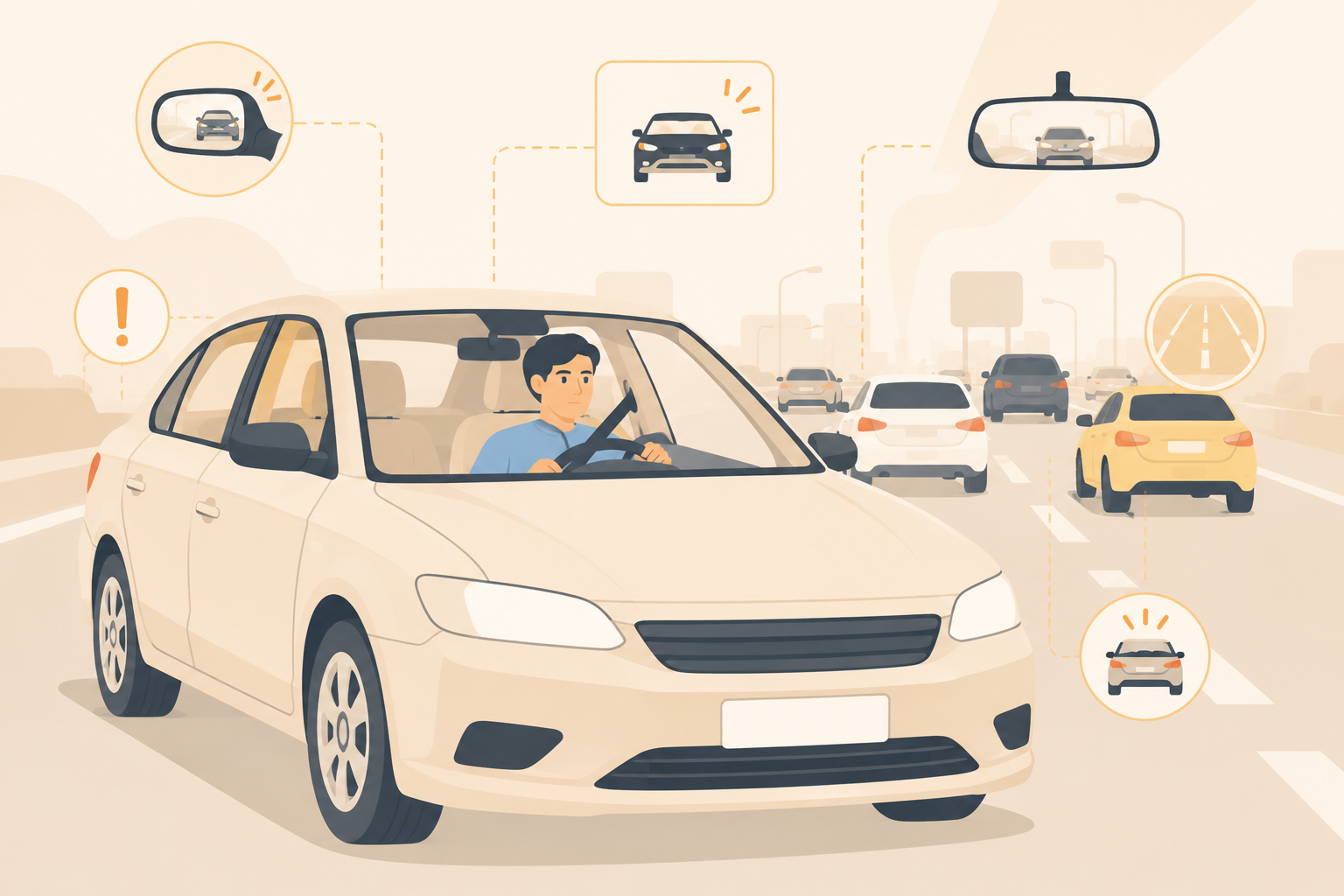
And I don’t mean in a dramatic, movie-scene kind of way where you can’t sit in the driver’s seat anymore. For many people after a motor vehicle accident in Alberta, it’s much quieter than that. It’s the feeling of your body becoming unusually alert while doing something that used to feel automatic.
You notice yourself gripping the steering wheel harder now. Your shoulders feel tight halfway into the drive. You become hyper-aware of every car merging beside you, every sudden brake light ahead of you, every loud bike that cuts past your lane during Alberta summers when the roads suddenly become louder and more impatient again.
You are still functioning.
But your nervous system is no longer treating driving like a neutral activity.
And honestly, this is one of the most common things people minimize after an accident because they tell themselves, “Well, I’m already driving again, so clearly I’m fine.”
But driving again and feeling normal while driving are two completely different things.
What people often misunderstand about driving anxiety after an accident
Most people think driving anxiety means fear.
They imagine someone panicking behind the wheel, refusing to drive, or being visibly distressed every time they get into a vehicle.
But that’s not what I see most often.
What I usually see are high-functioning adults whose bodies have quietly shifted into over-monitoring mode after an accident. They are still driving. They are still working. They are still showing up for responsibilities. But the drive itself now takes significantly more mental and physical energy than it used to.
And because they are still capable of driving, they dismiss what’s happening internally.
The best way I can explain it is this:
If you badly burn your tongue on a hot drink, the next few times you drink tea or coffee, your body automatically becomes more careful. You blow on it longer. You sip slower. You test the temperature first. Not because you are irrational, but because your body remembers what happened.
Driving after an accident can become very similar.
Your body simply does not want to go through that experience again.
So it becomes more cautious. More vigilant. More controlling. More prepared.
Not because you are weak.
Because your nervous system adapted.
The body sensations people don’t always connect to the accident
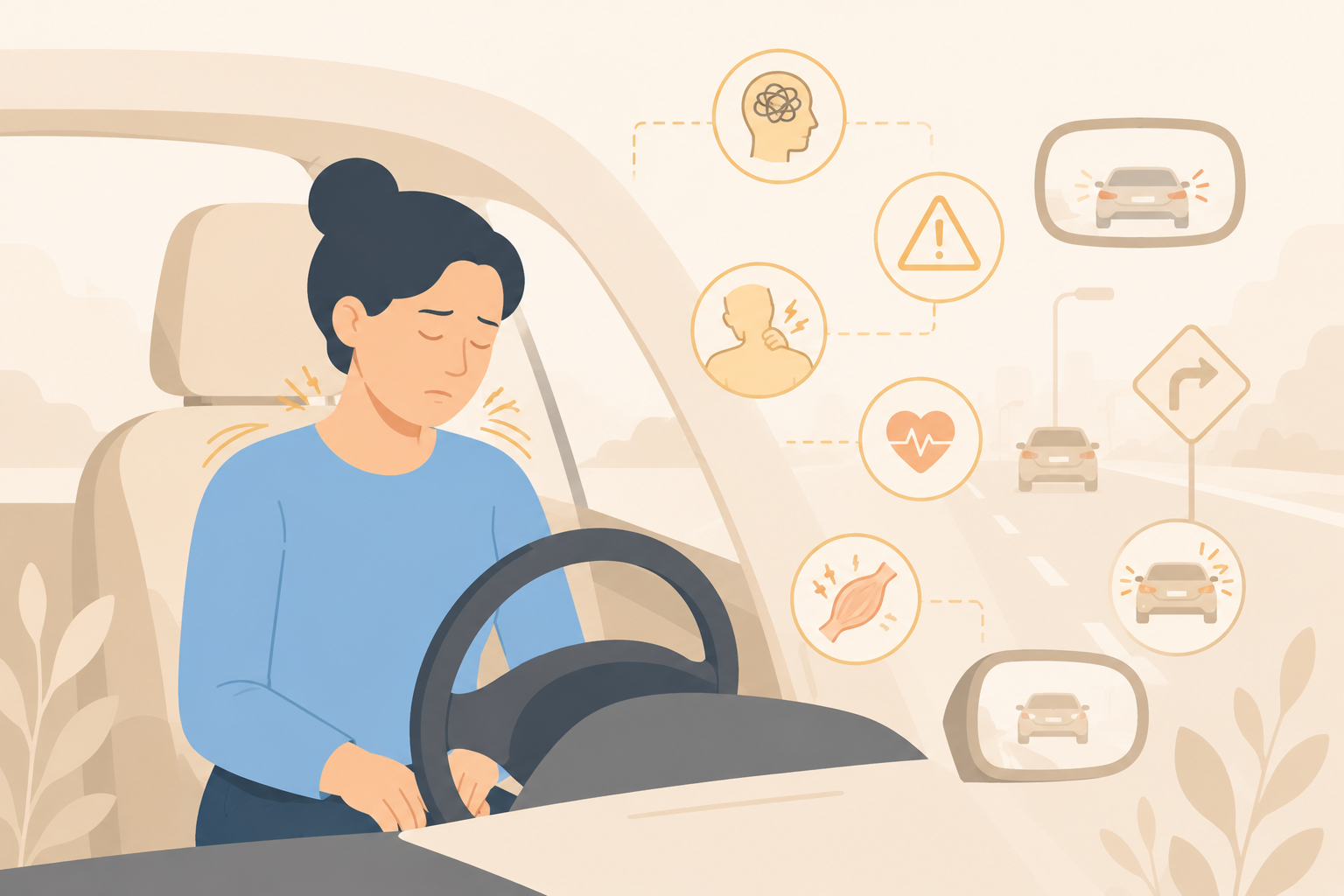
A lot of clients describe driving after an accident as physically exhausting, even when the drive itself is relatively short.
They notice that their shoulders remain tense for most of the drive. Their foot hovers over the brake more than it used to. Lane changes suddenly require much more thought than before. Even small things — like somebody cutting into their lane abruptly or honking unexpectedly — create a disproportionate stress response in the body.
And because Alberta driving culture involves long distances, highway commuting, aggressive summer driving, and constant construction detours, your nervous system often doesn’t get much opportunity to relax once you’re already feeling more alert behind the wheel.
In places like Leduc, where many people are regularly commuting in and out for work, or during longer stretches of highway driving near Lethbridge, people often describe feeling mentally “locked in” the entire drive. By the time they get home, they are not just physically tired — they feel neurologically drained.
And what becomes confusing is that this exhaustion doesn’t always make logical sense to them.
They think:
“But I just drove home. Why do I feel like I ran a marathon?”
Because your body was not casually driving.
Your body was monitoring.
Constantly.
Summer driving in Alberta can amplify this
Winter accidents get talked about a lot in Alberta, but honestly, summertime creates its own version of nervous system overload after an accident.
The roads become louder. Bikes are back out. People drive faster because the weather is finally good again. There’s more road travel, more sudden lane changes, more distracted driving, and generally less patience on the roads.
For somebody whose nervous system is already more alert after an accident, that increased movement and unpredictability can feel overwhelming in ways they struggle to explain to other people.
Especially because externally, they still appear “fine.”
So what often happens is people quietly begin adapting their life around the discomfort instead of addressing the discomfort itself.
They stop taking unnecessary drives. They bundle all errands into one trip so they don’t have to leave the house again later. They avoid driving at certain times of day. They stop taking scenic drives they used to enjoy. Some even stop picking up small things from Facebook Marketplace because the thought of another drive simply feels mentally exhausting.
And this is where something important starts happening psychologically:
The anxiety slowly starts getting preference over your preferences.
Not dramatically.
Practically.
Why people become more controlling in the car after an accident
One thing I notice often is that people become much more particular while driving after an accident.
The temperature in the car matters more. The music matters more. The route matters more. The traffic conditions matter more. The timing matters more. They may prefer driving alone because conversations feel overstimulating. Or they become unusually irritated if someone else in the car distracts them while driving.
And underneath all of this is usually one core need:
Control.
Because after an accident, the body often feels deeply aware of how quickly control can disappear.
So now your nervous system starts trying to control everything it can control.
And honestly, this becomes even heavier for parents.
Because when your kids are in the backseat, the pressure intensifies. People become more reactive while driving, more emotionally overloaded in traffic, and then later feel guilty for snapping at their children or their partner after getting home.
Not because they are bad parents.
Because their system has been under strain for much longer than they realize.
The part that nobody sees after you get home
One of the most overlooked parts of post-accident driving stress is what happens after the drive.
People often describe getting home and feeling an immediate drop in their body. That exhale. That sense of:
“Okay. I’m home.”
And then comes the exhaustion.
The doom scrolling. The collapsing onto the couch. The craving for sugar, caffeine, or comfort food. The feeling of not wanting to speak to anyone for a while. Sometimes even needing a nap after a longer drive.
This is the part many people judge themselves for because they think:
“Why is driving affecting me this much?”
But if your nervous system has spent the last forty minutes scanning for danger, monitoring traffic, managing tension, and staying hyper-alert, your body is going to feel depleted afterward.
That depletion is not weakness.
It’s physiological.
Why pushing through this usually backfires
A lot of high-functioning people try to overpower these changes by forcing themselves back into their old baseline immediately.
They tell themselves:
“I’m fine.”
“I need to stop overthinking.”
“I just need to get back to normal.”
But the problem is that your body may no longer be operating from the same baseline it had before the accident.
And when you continue demanding pre-accident performance from a nervous system that is still dysregulated, irritability, exhaustion, resentment, and avoidance often increase over time.
This is also why many people suddenly feel “shorter” emotionally after an accident. Less patient. Less flexible. Less able to tolerate inconvenience.
Not because they became an angry person overnight.
Because their internal bandwidth changed.
And they never gave themselves enough space to acknowledge it.
What support can actually look like
One of the biggest misconceptions people have about seeking counselling after a motor vehicle accident is that it means opening up their entire life story or committing to years of therapy.
That is not necessarily what MVA counselling is designed for.
At The Minds Matter, many people begin with a single MVA counselling session focused specifically on understanding how the accident has impacted their nervous system, driving experience, emotional regulation, work functioning, relationships, and day-to-day life.
After the session, clients receive a Clinical Snapshot — a structured document summarizing the functional and psychological impact of the accident, baseline observations, and screening indicators where appropriate. This document is prepared by a Canadian Certified Counsellor (CCC) and Counselling Therapist regulated through ACTA.
And because one of the most stressful parts of recovery is often the coordination itself, support can also include guidance around direct billing, insurance coordination, Section B questions, and documentation requirements where appropriate.
The goal is to make the process feel clearer, more manageable, and better supported while you are already carrying a lot.
Closing
If driving feels different after your accident, that does not mean you are weak, dramatic, or incapable.
It usually means your body is trying very hard to prevent itself from going through another overwhelming experience.
And the difficult part is that many high-functioning people become so focused on getting back to normal that they never pause long enough to recognize how much effort their nervous system is spending just trying to hold everything together.
Sometimes the most important part of recovery is not forcing yourself harder.
It is understanding what changed, why it changed, and giving yourself permission to respond to that honestly instead of treating yourself like a problem that needs to “snap out of it.”
FAQs
Is it normal to feel tense while driving after a car accident?
Yes. Many people experience increased physical and mental tension while driving after an accident, even if they are technically driving normally again. This can show up as shoulder tightness, gripping the steering wheel harder, hypervigilance, mental exhaustion, or feeling unusually alert throughout the drive.
Why does driving feel exhausting now?
Driving after an accident often requires significantly more nervous system energy than before. Your body may be constantly monitoring for danger, scanning traffic, anticipating mistakes from other drivers, and staying physically tense throughout the drive. That ongoing vigilance can become mentally exhausting.
Why do I keep avoiding certain drives?
Avoidance usually develops gradually after an accident. People begin avoiding highways, unfamiliar routes, unnecessary errands, night driving, or busy traffic because their nervous system associates driving with stress or unpredictability. Over time, this can quietly reduce your sense of freedom and flexibility.
Does this mean I have PTSD?
Not necessarily. Many people experience nervous system dysregulation, driving anxiety, increased vigilance, or emotional strain after an accident without meeting criteria for PTSD. A structured counselling session can help clarify what you are experiencing and what level of support makes sense.
What happens after the first MVA counselling session?
After your first MVA counselling session, you receive a Clinical Snapshot summarizing the impact the accident has had on your functioning, emotional regulation, nervous system patterns, and day-to-day life. From there, you can either continue with standalone sessions or move into the structured five-session MVA Recovery Program depending on what level of support feels appropriate for you.

Anjali Nagda
Anjali Nagda is the Founder and Lead Clinician at The Minds Matter. She is a Canadian Certified Counsellor (CCC) and Registered Clinical Counsellor (RCC), offering virtual counselling to adults across Canada.
Related Blogs
No related blogs available.