
Why Does My Mind Keep Going Back to the Accident Even Though It’s Over?
13 Jun 2026
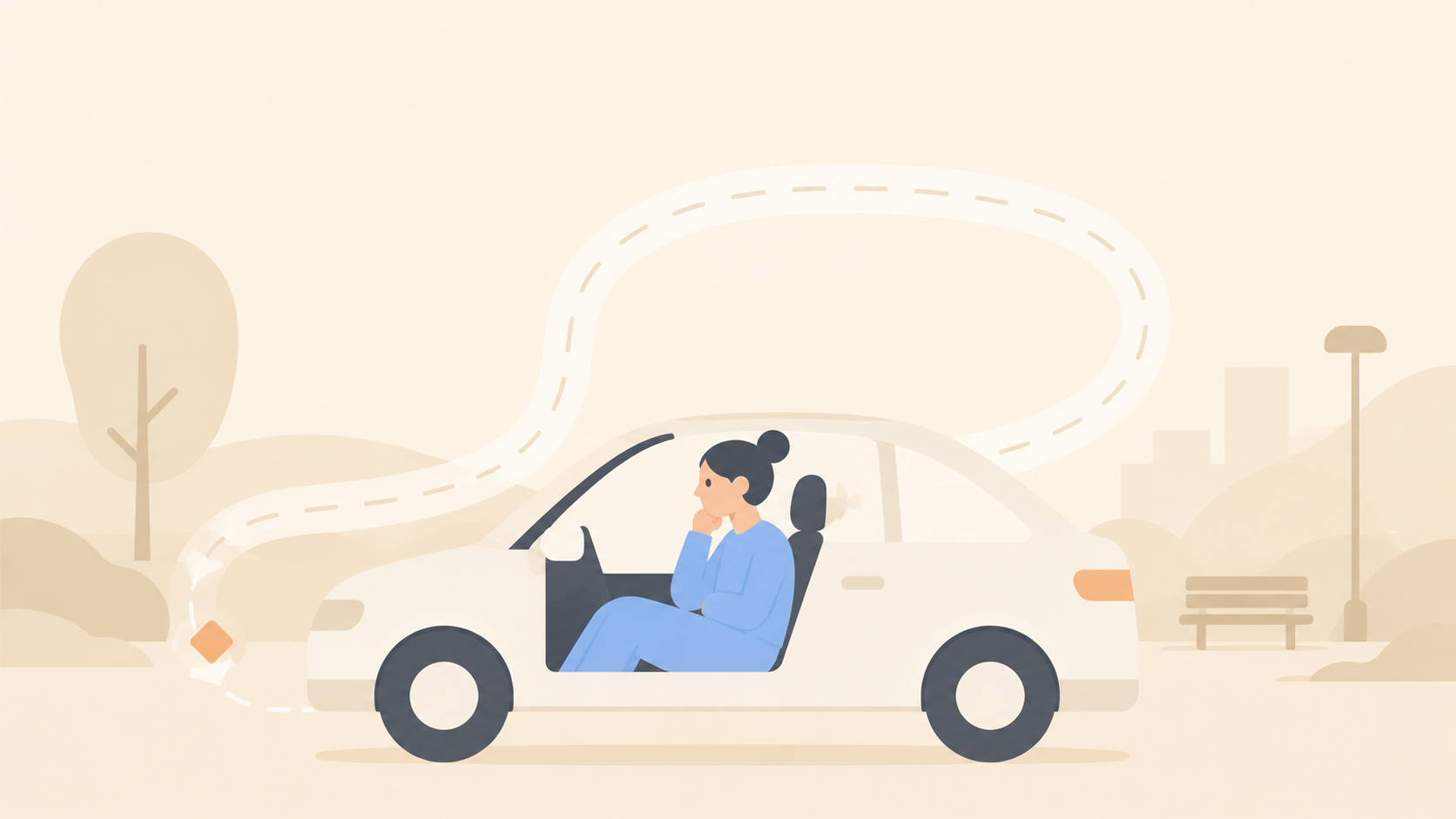
The strange thing about a car accident is that it often lasts only a few seconds.
The impact happens. Everybody checks if they’re okay. The vehicles get moved. Information gets exchanged. The tow truck arrives. Insurance gets notified.
And then life is somehow supposed to continue.
But for many people, that’s not actually how it feels.
The accident may be over, but their mind keeps going back to it.
Not necessarily every minute of every day. Not in some dramatic movie-scene kind of way. But often enough that they begin wondering:
“Why am I still thinking about this?”
The truth is, I don’t think the mind always keeps returning to the accident because it is trying to process the accident itself.
Sometimes it keeps returning to the accident because the accident became a reference point.
A before and after.
A moment that interrupted a life that had previously felt fairly predictable.
The Accident Happened Quickly. Understanding It Takes Longer.
One of the hardest things about a motor vehicle accident is how quickly it happens compared to how long it can take to make sense of it.
Before the accident, you were probably busy being a normal human being.
You were thinking about work deadlines.
Wondering whether you should finally book that vacation.
Trying to get through your inbox.
Planning dinner.
Thinking about your kids.
Thinking about your next weekend.
Thinking about a hundred ordinary things that make up an ordinary life.
Nobody wakes up on a Tuesday morning expecting that a car accident is going to become one of the defining events of their year.
And yet, for many people, that’s exactly what happens.
Because once the dust settles, the mind starts trying to reconstruct the experience.
You might find yourself replaying the sequence of events.
Where did the other vehicle come from?
Could I have reacted differently?
What if I had left work ten minutes later?
What if I had taken a different route?
Was there something I missed?
And sometimes there are answers.
But often there aren’t.
The mind doesn’t particularly enjoy uncertainty, especially when uncertainty involves safety.
So it keeps circling back.
Not because it’s broken.
Not because you’re weak.
Because it’s trying to understand something that happened faster than it could fully process.
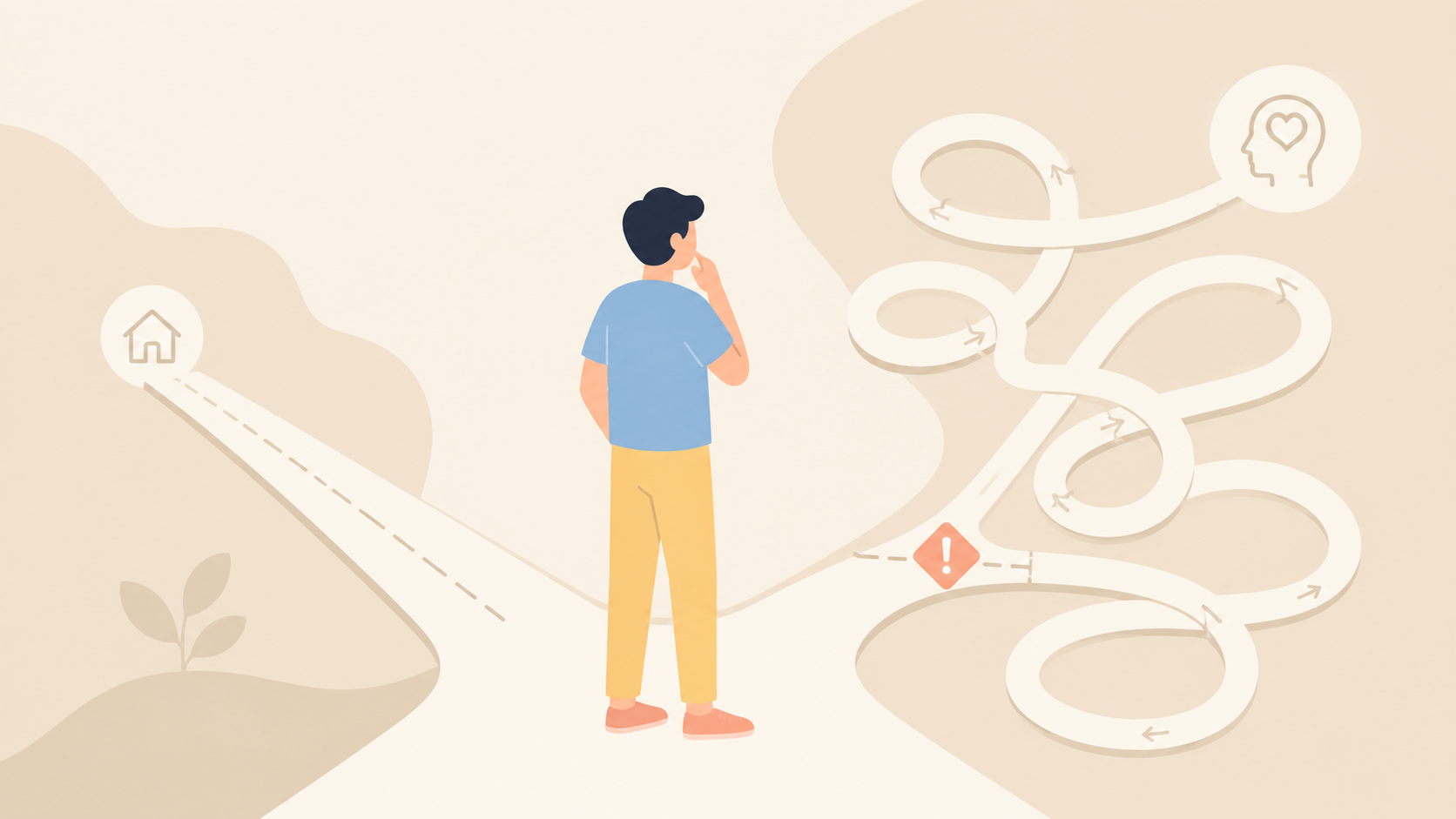
Sometimes You’re Not Thinking About What Happened. You’re Thinking About What Could Have Happened.
This is the part I think gets missed most often.
A lot of people walk away from an accident saying:
“Thank God it wasn’t worse.”
And honestly, I usually agree.
But sometimes that gratitude becomes so loud that it drowns out everything else.
Because right beside the gratitude is another realization:
It could have been worse.
Much worse.
And now your mind has access to possibilities that weren’t taking up space before.
What if I had been seriously injured?
What if I couldn’t work?
What if my children had been in the vehicle?
What if I had lost my income?
What if I hadn’t made it home?
The accident is over.
But those possibilities aren’t.
And sometimes what the mind keeps returning to isn’t the collision itself.
It’s the awareness of how differently life could have unfolded.
The Accident Becomes A Wake-Up Call You Never Asked For
I think this is where things start becoming more complicated than simply “processing the accident.”
Because accidents have a strange way of forcing people into conversations with themselves that they weren’t planning on having.
Before the accident, you were probably operating inside a timeline that felt relatively predictable.
Not guaranteed.
Just predictable.
You assumed there would be another weekend.
Another summer.
Another opportunity.
Another chance to get around to that thing you’ve been postponing.
Most of us live that way.
We have to.
Otherwise we’d spend our entire lives worrying about things we can’t control.
Then something happens that reminds you, very abruptly, that you actually have far less control over the timeline than you thought.
And for some people, that’s the part that lingers.
Not the accident.
The reminder.
The reminder that life is fragile.
The reminder that plans are not promises.
The reminder that outcomes are not guaranteed.
Suddenly people start thinking about things they weren’t thinking about before.
Their relationships.
Their health.
Their goals.
The trip they keep postponing.
The business they keep saying they’ll start one day.
The conversations they’ve been avoiding.
The things they would regret if tomorrow looked very different from what they expected.
I’ve seen people make major life decisions after accidents.
Not because the accident told them what to do.
But because the accident forced them to take a hard look at what actually mattered.
And once you’ve had that realization, it takes a little while for the dust to settle.
The Accident May Be Over. Your Nervous System Is Still Catching Up.
There is also a very practical reason why your mind keeps returning to the accident.
Your body experienced something significant.
An accident creates a powerful surge of activation.
Your system goes from normal to emergency in a matter of seconds.
Your attention narrows.
Your heart rate changes.
Your body prepares for impact.
Then the event ends.
But your nervous system doesn’t always return to baseline at the same speed.
That’s why many people notice that they’re more alert than they used to be.
More cautious.
More aware.
More prepared.
Before the accident, driving through downtown Calgary may have simply been annoying.
After the accident, it can suddenly feel significant.
You notice every lane change.
Every impatient driver.
Every vehicle trying to beat a yellow light.
Every person who seems to be paying more attention to their phone than the road.
The drive itself hasn’t changed nearly as much as your relationship to the drive has changed.
Your body is paying attention now.
Because it learned something.
It learned that unexpected things can happen.
Replaying Doesn’t Always Look Like Replaying
A lot of people imagine replaying the accident as dramatic flashbacks.
Most of the time it looks much quieter than that.
It can look like becoming unusually aware of accidents in the news.
Avoiding certain roads.
Checking your mirrors more often.
Feeling tense at intersections.
Thinking about the accident while standing in a grocery store.
Or feeling a little anxious when somebody else is driving.
Sometimes it can even show up as a sense of hypervigilance that follows you beyond the road.
At work.
At home.
In public places.
Because once your nervous system has been reminded that things can change quickly, it sometimes spends a little extra time scanning for what might happen next.
Why It Becomes So Frustrating
The frustrating part is that most people don’t want to think about it anymore.
They want to relax.
They want to feel normal.
They want their old sense of ease back.
And then somebody inevitably says:
“Well, just be careful next time.”
Believe me, Betty, I know.
I was there.
Nobody is taking a drive through downtown Calgary a week after an accident thinking:
“You know what? Today feels like a great day to stop paying attention.”
You’re already paying attention.
Probably more attention than ever before.
The problem isn’t that you’re not being careful.
The problem is that your system hasn’t fully settled yet.
And those are two very different things.
What Actually Helps?
One of the most common responses to these thoughts is trying to get rid of them.
Distract yourself.
Stay busy.
Push through.
Tell yourself you’re overreacting.
Tell yourself it’ll pass.
Sometimes people find themselves leaning more heavily on alcohol, cannabis, scrolling, work, or anything else that gives their mind a break for a little while.
And honestly, that’s understandable.
The mind can get tired of carrying the same questions around.
But I’ve often found that what helps isn’t forcing the thoughts away.
It’s giving them somewhere to go.
Some people journal.
Some people record voice notes.
Some people go for long walks.
Some people set aside a specific time during the week to sit with what’s been coming up rather than fighting it throughout the day.
A kind of worry hour.
A container.
Because when thoughts have no place to land, they tend to follow us everywhere.
And sometimes counselling can become that container too.
Not a place to endlessly revisit the accident, but a place to understand what changed, what still feels unsettled, and how to move forward without carrying the entire experience around all day.
In my own work, I often draw from solution-focused approaches, breathwork, and hypnotherapy because the goal is not to keep people stuck in the story of the accident.
The goal is to help them understand the impact of it, adapt to what changed, and gradually regain their footing.
Final Thoughts
If your mind keeps going back to the accident, it doesn’t automatically mean something is wrong with you.
Sometimes it means something important happened.
Something that disrupted your sense of safety.
Something that challenged your assumptions about predictability.
Something that reminded you, however briefly, that life is both precious and uncertain.
A car accident may only take a few seconds to happen.
But the perspective it creates can stay with people much longer.
And sometimes what your mind is trying to make sense of isn’t just the accident.
It’s what the accident revealed.

Anjali Nagda
Anjali Nagda is the Founder and Lead Clinician at The Minds Matter. She is a Canadian Certified Counsellor (CCC) and Registered Clinical Counsellor (RCC), offering virtual counselling to adults across Canada.
Related Blogs
No related blogs available.